Cherry Wood Color: Aging, Grain, Pores, and Finish Clues
Identify cherry wood color cues: how fresh sapwood, fine pores, straight grain, and aging patina point toward cherry without relying on a single image.
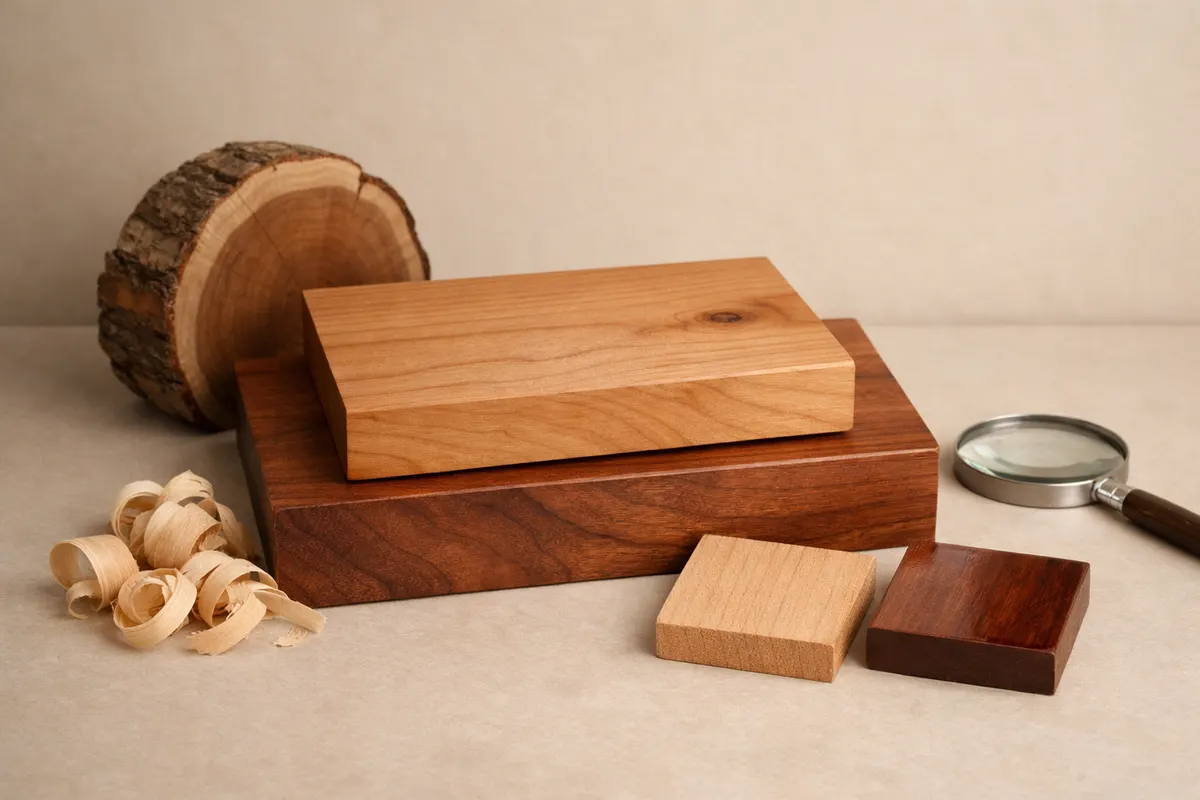
Quick answer for cherry wood color
Cherry wood color commonly starts pale and warm—think pinkish tan or light reddish-brown when freshly cut—and develops into a richer, deeper reddish-brown patina with exposure to light and air. That progressive darkening is one of the clearest visual behaviors to expect: newly exposed cherry looks noticeably lighter than the same board after months or years of daylight.
Color by itself isn’t definitive, but paired with a few stable features—pale sapwood that contrasts with a warmer heartwood, a fine, often straight grain, and small, tight pores—cherry becomes a much more plausible match. Those consistent structural clues are more reliable across different lighting and finishes than hue alone.
If you need a quick checklist: look for a warm red-brown heartwood that darkens with age, a narrow, pale sapwood band, diffuse and small pores (not large open pores), and smooth, even texture. Treat any single photo as a starting point: take a few views, note the finish type, and use that evidence together before drawing a conclusion.
Strongest visual clues
Sapwood vs. heartwood contrast: Cherry usually shows a noticeable color boundary between pale sapwood (straw to cream) and warmer heartwood (pink to red-brown). Sapwood is often a thin, clearly lighter band along edges or end grain. If you can find an unfinished edge or the end grain, that contrast is one of the most useful field clues.
Age-driven patina: Freshly milled cherry appears lighter—sometimes almost beige with a pink cast—but it darkens to richer reddish-brown or mahogany tones within months of exposure. When evaluating color, ask whether the piece looks freshly planed, sun-darkened, or uniformly coated with finish; the same board can show multiple ages in different places (underside vs. top surface).
Pore pattern and texture: Cherry is diffuse-porous with very small, evenly distributed pores, which gives it a fine, smooth grain texture. On the face a phone photo will usually show a tight, straight grain; on end grain you should see tiny pore dots rather than the large open pores found in oak or ash. Those small pores resist heavy grain figure and create a softer, velvety look under varnish.
Figure types and occasional features: While straight grain is common, cherry can show curly or fiddleback figure in short sections and occasional gum pockets or mineral streaks. These are useful confirming details when present, but they are intermittent—absence of figure doesn’t rule out cherry, and presence doesn’t guarantee it either.
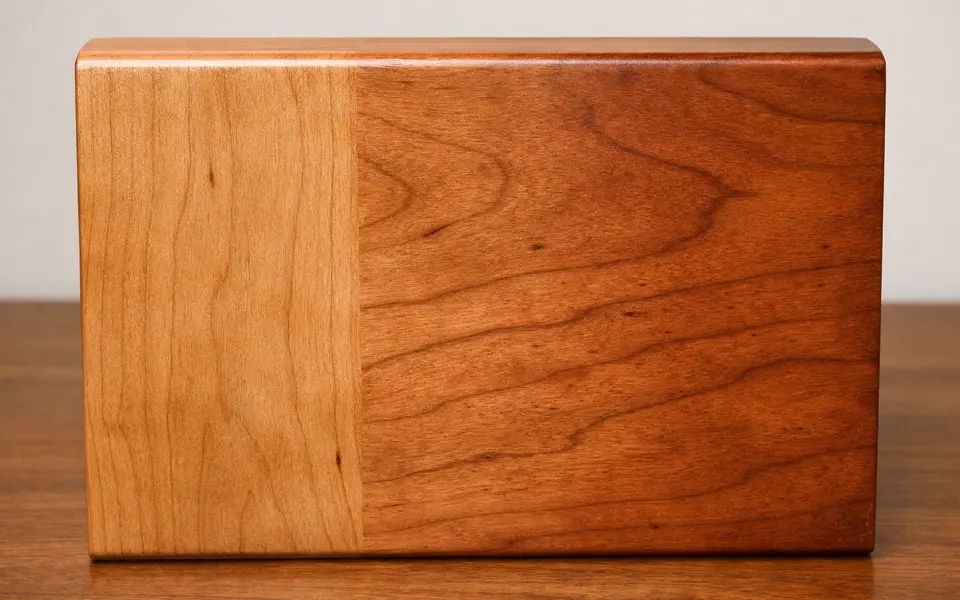
- Pale, narrow sapwood band contrasting with warm heartwood
- Progressive darkening: light/pinkish when fresh → deeper red-brown with age
- Diffuse, small pores (tiny dots on end grain) and smooth texture
- Common straight grain, occasional curly figure or small gum pockets
Weak signals
Surface color in a single photo is a weak signal unless you know the finish and lighting. Many stains, varnishes, or oils mimic cherry’s warm tones, and a glossy polyurethane can make other woods look richer than they are. Always check for a raw or planed area where finish hasn’t altered the wood tone.
Gloss, reflections, and white balance can trick your eye: warm indoor lighting brings out reds and hides yellow undertones, while cool daylight flattens reds and exaggerates beige. A phone camera’s automatic white balance can change perceived hue between shots, so compare multiple images taken in different light when possible.
One-angle photos and surface wear are unreliable. Edges, end grain, and undersides often tell a different story than the top surface of a finished board. Hardware, stain, filler, or paint residues can mask grain and pores. Treat features like screw holes or veneer seams as clues that the visible surface may not be the original wood.
- Single photo color under artificial light
- High gloss or thick finish hiding grain
- Stain, dye, or filler that alters natural hue
- Veneer or thin surface layers that mimic wood beneath
Comparison workflow
Start by assembling at least three photos: a close-up of the face (to show grain and pores), an end-grain shot (to reveal pore size and arrangement), and a clear edge or unfinished area (to show sapwood). If the piece has an underside or hidden surface, include that too. The goal is to combine color behavior with structural clues rather than relying on tone alone.
Step through clues in order: sapwood contrast first, then pore size on end grain, then overall grain pattern and any figure. If sapwood is narrow and pale, pores are tiny and evenly spaced, and grain is generally straight, cherry is a stronger candidate. If you find large open pores, prominent rays, or coarse texture, pivot away from cherry toward oak, ash, or similar species.
Compare examples instead of names. Find two to three well-documented reference photos that match the same finish state (raw vs. finished vs. aged). Lay your samples side-by-side visually or in an image grid. Pay attention to how the reference pieces age: a fresh cherry reference should look lighter than an aged cherry reference, which helps you decide whether you’re seeing finish, sunlight exposure, or an inherent species hue.
Keep a short research note with context: where the item came from (region, factory, era), whether it’s furniture or structural lumber, and any prior repairs. Those details change how you weight clues—for example, American black cherry from furniture tends to have narrower sapwood and more consistent figure than rough-sawn lumber from mixed sources.
- Take at least three views: face, end grain, and an unfinished edge
- Order your checks: sapwood contrast → end-grain pores → grain/figure
- Compare against references in the same finish/age condition
- Record provenance and repair history as research context
App workflow
After you’ve gathered the visual checklist, use Wood Identifier - Wudora as a structured second pass. Start by scanning the same three views you used for manual comparison (face, end grain, and sapwood edge). The app can suggest candidate species based on the images, but treat its output as research leads rather than a definitive answer.
When submitting photos in the app, include short notes about finish, age, and location on the piece (for example: ‘dining table top, varnished, darkened side vs underside raw’). Those context notes help interpret algorithmic suggestions and keep your identification process transparent—especially if you later consult a dealer, restorer, or lab.
Use the app’s suggested matches to refine next steps: if candidates include cherry, compare the app’s examples to your reference photos and check for sapwood contrast and pore size. If the app suggests hardwoods with open pores (oak, ash) instead, prioritize end-grain inspection and look for rays or ring-porous patterns that would rule cherry out.
Finally, treat uncertain results as research notes. If the app’s top suggestions are mixed or conflict with your structural clues, collect physical samples (small, non-destructive shavings or a tiny end-grain fragment) and consider a hands-on check by a luthier, furniture restorer, or wood lab for high-stakes identifications.
- Scan face, end grain, and an unfinished edge with the app
- Add short context notes: finish type, age, and piece location
- Compare app suggestions to your own pore and sapwood checks
- Use uncertain results as starting points for deeper testing
Related guides
Check your cherry clues, then scan with Wood Identifier - Wudora
After you’ve verified sapwood, pores, and grain, use Wood Identifier - Wudora to scan the same photos and get candidate matches. Treat app results as research notes—use them to refine comparisons or decide if you need hands-on testing or expert appraisal.

Frequently asked questions
How does cherry wood color change over time?
Cherry darkens noticeably with exposure to light and air: freshly cut surfaces start pale with a pink cast and gradually deepen to warm reddish-brown over months or years. The pace changes with light intensity, finish, and whether the piece is indoors or outdoors.
Can I tell cherry from mahogany or walnut by color alone?
No—color alone can be misleading because stains and finishes mimic many species. Use structural clues like sapwood contrast, pore size, and end-grain pattern to separate cherry from mahogany (mahogany tends to have broader rays and different pore structure) and walnut (which typically shows darker brown tones and different grain texture).
Will a varnish or oil finish hide cherry’s identifying features?
Finishes can mask subtle color differences and reduce visible pore detail, but end grain and any unfinished edges often retain useful clues. If you can safely examine a hidden surface, edge, or end grain, those areas are less affected by finish and give better identification evidence.
What if the wood is veneered or has filler—can I still check for cherry?
Veneer and filler can hide or imitate natural wood. Look for seam lines on edges, differences at screw holes, or backing material visible inside drawers. If a thin surface layer is present, the underlying substrate may be a different species and will require more invasive checks or professional assessment.