Furniture Wood Types: Grain, Color, Weight, and Construction
Learn to read grain, pores, end grain, weight clues, and construction so you can evaluate furniture wood types safely and confidently.
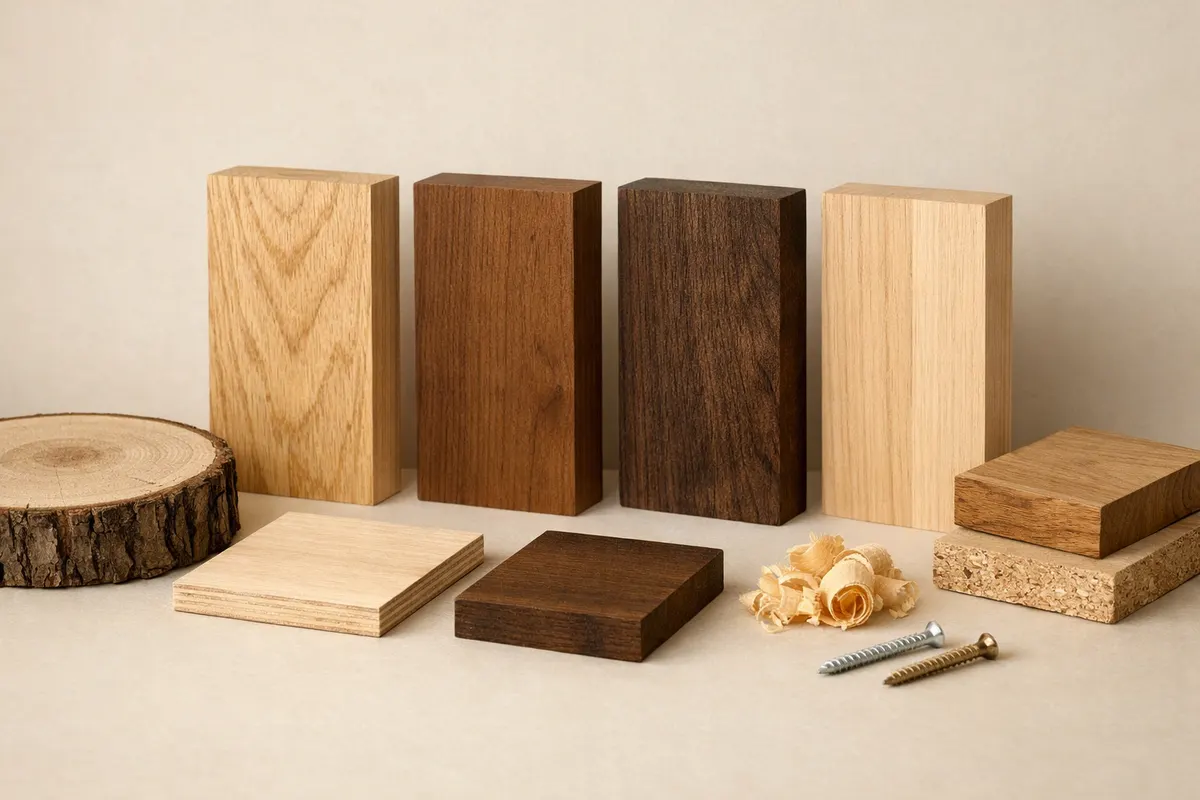
Quick answer for furniture wood types
When you’re trying to sort furniture wood types from photos, prioritize structural and grain clues over color. Grain arrangement (ring-porous versus diffuse-porous), visible pores and rays, end-grain texture, and joinery patterns give the strongest signals about species groups.
Construction details — whether panels are solid, veneered, or plywood — often tell you more about the material than surface color. A repeated, identical grain pattern almost always means veneer; thick rails, tight dovetails, or visible end grain are clues that point toward solid wood.
Treat every single photo as one piece of evidence, not proof. Use visible clues to narrow possibilities, collect a few targeted images (close-up of grain, end grain, an edge, and underside or drawer), and then compare those traits with known examples before reaching a working ID.
Strongest visual clues
Pore pattern and distribution survive most lighting and finishing better than color. Ring-porous woods like oak and ash show large pores aligned in earlywood bands; diffuse-porous woods like maple, birch, and poplar show evenly distributed, tiny pores. Look for groups of larger pores or a uniform pore field rather than relying on hue.
End grain reveals rays and pore paths you can’t see on the surface. A close, in-focus photo of the end grain will show ray fleck in oak, tiny diffuse pores in maple, or resin canals and pitch pockets in some softwoods. Even a small exposed edge from a drawer or cutaway can be diagnostic.
Figure and ray patterns are durable clues. Medullary rays — the narrow, light streaks that ray out from the center of the tree — are prominent in oak and show as silvery ray fleck on quarter-sawn boards. Interlocked or wavy figure can suggest mahogany, walnut, or certain maples; look at how figure repeats and whether it aligns with board edges.
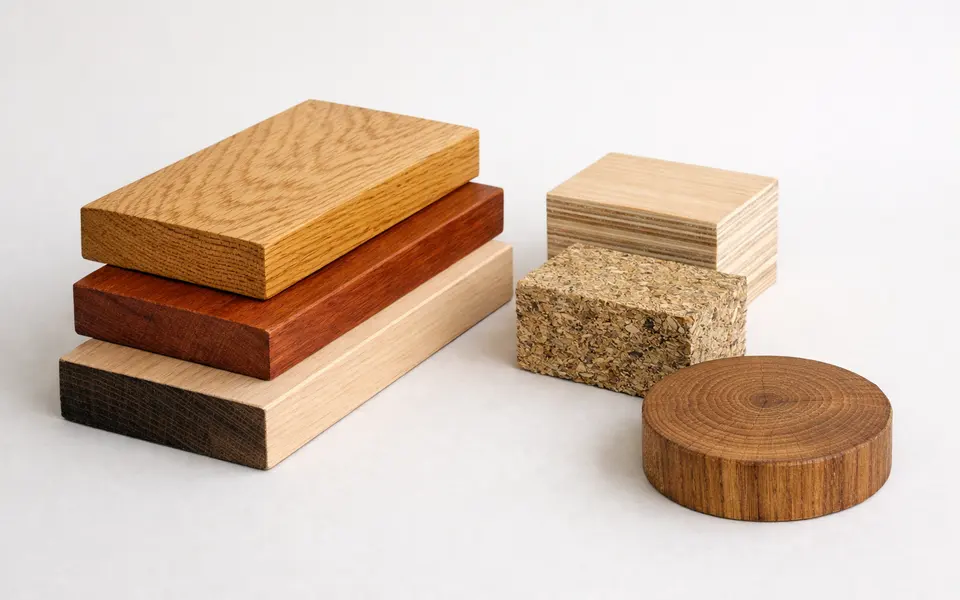
- Pore size: large and grouped → ring-porous (oak, ash). Small and even → diffuse-porous (maple, birch).
- Rays visible on quarter-sawn faces → likely oak or related species.
- End-grain pore arrangement and ray size are stronger than surface color.
- Repeated identical grain patterns across wide panels → veneer, not solid.
Weak signals
Color is the most misleading single clue: stain, varnish, sun exposure, and age can radically change a piece’s tone. A piece that looks dark brown in one photo might be cherry with years of patina, walnut with a finish, or mahogany-stained oak. Don’t assume species from hue alone.
Knots, grain direction, and surface sheen can disguise or mimic species traits. Knots are often characteristic of softwoods like pine but can appear in lower-grade hardwoods and veneers. Sheen from polishing or oiling will hide pore depth and make species appear smoother than they are.
One-angle photos and heavily cropped details remove context. Without scale, edge views, or underside shots, you miss construction cues and end-grain that are frequently decisive. Treat single photos as prompts for further inspection rather than final answers.
- Color and finish: poor single-photo evidence for species.
- Knots and surface effects: can mislead toward softwood or rustic hardwood.
- One perspective: rarely enough to tell veneer from solid wood.
Comparison workflow
Start by gathering four targeted images: a close-up of a flat face (to see pores and figure), an end-grain or exposed edge, a full-view for construction and scale, and a shot of underside or joinery. These photos together let you cross-check grain, pore pattern, and construction notes.
Match by trait, not by color. If the face photo shows large, evenly spaced pores in growth-ring bands, compare that trait to ring-porous examples (oak, ash) rather than scanning images of brown woods. If rays or fleck are visible on the face or end grain, prioritize oak-related matches.
Use elimination to narrow to a small set of likely species. Example: a medium-brown table with cathedral grain and small, diffuse pores likely excludes oak and ash and moves the candidate list toward maple, birch, or stained pine. If the same piece shows repeated matching patterns, add “veneer” to the list.
When comparing similar species, look for specific separators: walnut typically has a straight to wavy grain with chocolate tones and occasional flame figure; mahogany tends to show interlocked, ribbon-like grain and a red undertone when unfinished; cherry starts lighter and develops a rose-red patina with age.
Note construction clues as part of your comparison: dovetail joinery, solid end grain on rails, or single-piece tabletops suggest higher likelihood of solid hardwood; plywood cores, visible seams, or repeated grain veneers indicate engineered surfaces or thin veneers.
- Collect 4 photos: face, end grain/edge, full view, underside/joinery.
- Compare pore distribution and ray pattern first, color second.
- If grain pattern repeats identically across a panel, suspect veneer.
- Use construction (joinery, rails, thickness) to assess solid vs veneered.
App workflow
After you check visible clues, use a hands-on app like Wood Identifier - Wudora as a structured first pass. Enter the photos you’ve taken, add notes on construction and location, and treat suggested matches as research leads—not conclusive identifications.
Prioritize adding an end-grain or edge image in the app results because many algorithms and field guides weight pore and ray patterns heavily. If the app suggests multiple species, re-check the strongest visual clues (pores, rays, end grain) and look for one trait that clearly rules a candidate in or out.
Keep a short record of your confidence level and why. For example: “Candidate: oak (medium confidence). Evidence: ring-porous pores, visible rays on quarter-sawn face, dovetail joinery suggests solid boards. ” That note makes future verification easier and helps you track cases where the app’s suggestion needs expert follow-up.
- Use multiple photos and describe construction in the app entry.
- Treat app suggestions as starting points; verify with physical checks if needed.
- Save notes that document which traits support or contradict the app result.
- For broader visual clues and lookalikes, see Wood Visual Checklist: Common Clues, Lookalikes, and Next Steps (https://woodidentification. app/blog/wood-visual-checklist).
Related guides
Next step: check clues, then use Wood Identifier - Wudora
After you photograph the face, end grain, and construction, use Wood Identifier - Wudora on your device to get candidate matches and preserve your notes. Treat app results as research—record which visual clues support or contradict each suggestion and seek physical verification for high-stakes decisions.

Frequently asked questions
Can I identify furniture wood types by color alone?
No. Color is highly affected by finish, stain, UV exposure, and wear. Use color only as a secondary hint after inspecting pore pattern, end grain, and construction. Photographs that show raw edges or unfinished interiors are far more reliable for species clues than surface hue.
How can I tell veneer from solid wood in photos?
Look for repeating grain motifs across wide panels, abrupt grain direction changes at edges, and visible seams. Edges where the top layer peels or shows a thin layer of grain over a different core are strong veneer indicators. Underside or drawer-edge photos are often the clearest place to spot veneer construction.
What’s a quick way to tell oak from ash in furniture photos?
Both are ring-porous and can look similar at a glance. Oak usually shows pronounced medullary rays as visible fleck on quarter-sawn faces; ash typically has straighter, more uniform grain without the same ray fleck. Pore size and the presence of rays on end grain are the key separating traits.
How accurate is a single photo for identifying furniture wood types?
A single photo is rarely definitive. It can suggest a short list of likely species groups but won’t prove identity, age, value, or authenticity. The best approach is multiple photos capturing face, end grain, edges, and construction with notes on provenance or known history—then compare traits across those images.