
Coated surface; eastern white pine unconfirmed
Can a painted surface identify eastern white pine wood? This real example separates visible weathering from the anatomical evidence needed for a stronger match.
Identification summary
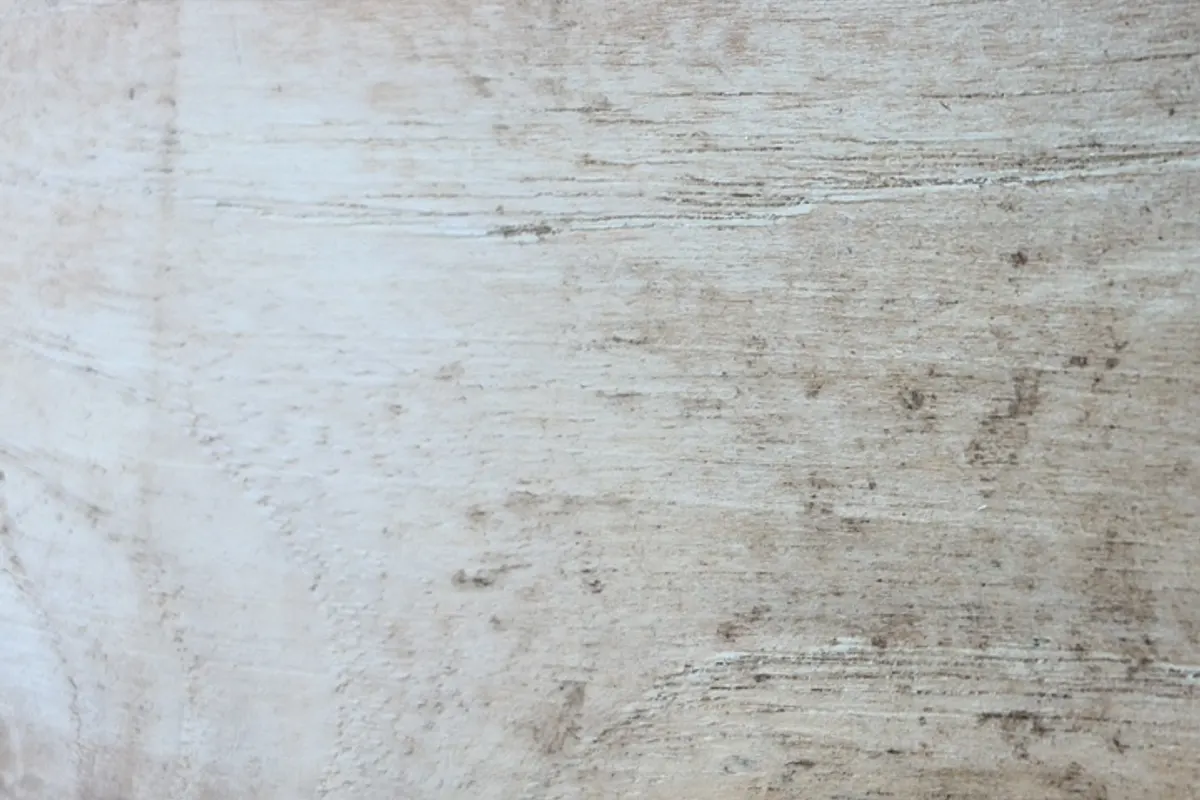
The scan suggested eastern white pine wood for this pale, weathered surface. The photograph shows a light coating, darker linear marks, and irregular worn areas. It does not show a complete board, a clean end-grain face, or a reliable scale. Eastern white pine remains a tentative suggestion rather than a demonstrated identification.
The coating and weathering obscure the underlying structure. Surface streaks may follow grain, but this view does not reveal enough anatomy to separate eastern white pine from other softwoods or to confirm the material from texture alone. The visible color belongs partly to the finish and cannot be treated as the natural wood color.
The scan also suggested a North American origin. No label, provenance record, or location evidence in the photograph establishes that claim. Keep it as an unverified possibility rather than a fact about this particular item.
Evidence
| Visible condition | Coated and weathered surface |
|---|---|
| End grain | Not shown clearly |
| Species | Eastern white pine suggested, not confirmed |
| Origin | Unverified |
Historical context
First photograph the whole object or board. Show an existing uncoated edge and an existing end surface if either can be reached safely. Include a ruler in the same plane and use diffuse light. A sharp close-up is more useful than an enlarged, blurred view because fine structural details cannot be reconstructed reliably from missing pixels.
End-grain photographs can reveal growth-ring structure and resin canals at suitable magnification. Other distinctions may require microscopic sections and specialist interpretation. Pines are softwoods and lack the vessel pores used to identify many hardwoods; a generic claim about visible pores would therefore be misleading for a pine identification.
Ring width alone is not a species test. It varies with growth conditions and the tree’s life history. Wide or narrow rings can occur in different species, while weathering and coatings change their apparent contrast. Likewise, a soft feel or low apparent weight does not establish eastern white pine without dimensions, moisture information, and stronger anatomical evidence.
Do not sand or strip an unknown old coating just to obtain a clearer photo. Work with existing exposed surfaces, and ask a specialist about safe examination if the object has historical value or the coating is uncertain. Avoid making a permanent alteration for a tentative app result.
Eastern white pine (Pinus strobus) is native to eastern North America and has a substantial history as a timber tree; the USDA Forest Service species account (https://research.fs.usda.gov/silvics/eastern-white-pine) provides regional background. That history makes it a plausible candidate for some reclaimed lumber, but it does not identify this surface.
An invoice, maker’s specification, or trustworthy construction record could narrow the possibilities. Record where each claim comes from: a document, a physical observation, or a photo-based suggestion. If those disagree, retain the uncertainty. For related construction clues, see Furniture Wood Types (https://woodidentification.app/blog/furniture-wood-types), then return to the anatomy and provenance of the actual item.
Related guides
Compare a tentative identification with the actual wood
Use Wudora (https://woodidentification.app/) for a photo-based wood-identification suggestion. Compare the result with clear anatomical evidence and records; a painted surface alone cannot confirm the species.
Take the next step →Frequently asked questions
Does this photograph confirm eastern white pine?
No. A painted, weathered surface lacks the clear anatomical and provenance evidence needed for that conclusion.
Can a good end-grain photo help?
Yes. At suitable resolution it can reveal growth rings and resin canals. Some species distinctions still require microscopy or a specialist.
Does wide grain prove eastern white pine?
No. Growth-ring width depends on growing conditions and occurs across multiple species.
Should I sand the surface for identification?
Do not disturb an unknown old coating just for a photo. Use already exposed areas and seek specialist advice when necessary.