Types Of Pine Wood
Types of Pine Wood: Quick Visual ID Clues & Photo Tips
Practical visual guide to types of pine wood: what to photograph, key and lookalike clues, and how to use a photo ID for a first-pass result.
You can often narrow a piece down to a pine subgroup from a clear photo of the face, edge, and knots. For types of pine wood the fastest useful result answers whether your board is a soft pine (like many eastern species) or a harder, resin-rich commercial pine used in furniture and joinery.
A photo identification is a practical first pass because it flags the most telling visible evidence: color range, knot pattern, grain width, and how the end grain looks where the growth rings show. That lets you decide which follow-up checks — odor, density, or end-grain cuts — are worth doing.
This page focuses on the visual clues to capture and the safe next checks to confirm an ID. Use these tips to prepare photos that give the clearest signals to a wood-identification tool or an expert reviewer.

How identification works
Step 1
Snap a photo
Take a clear, well-lit photo of your item in the Wood Identifier - Wudora app.
Step 2
Get an instant identification
The app reads the visible clues and returns the closest matches in seconds.
Step 3
Review the details
Compare the result with your photo, review any uncertainty, and check the suggested next steps.
Visual signals for identifying pine wood
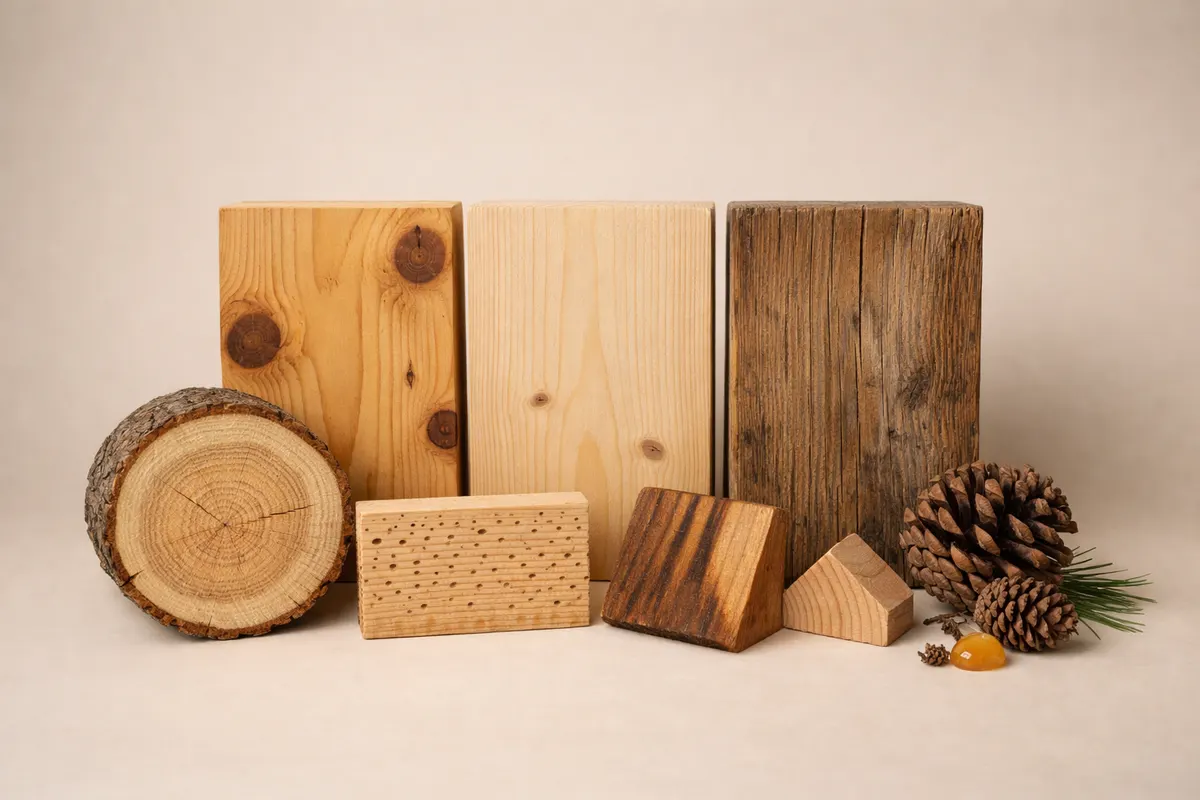
Inspect these visible signals in this order: surface color and texture, knot character, grain spacing and growth-ring contrast, and the exposed edge or end grain. Each shows a different part of the tree’s growth pattern or milling process and narrows the pine group.
When photographing, include a ruler or coin for scale, a close-up of a knot, and a straight-on end-grain shot if possible. Sharp photos under natural light reduce ambiguity from stains or varnish that mask true color.
Below are the concrete signals to check and what they usually imply for types of pine wood.
- Color and sapwood contrast — Look for pale, creamy sapwood versus yellow-brown heartwood; wide pale sapwood often points to younger soft pines.
- Knot pattern and size — Tight, frequent small knots suggest species used in construction; larger scattered knots often appear in old-growth or certain furniture-grade pines.
- Grain spacing — Wide, loosely spaced growth rings indicate fast-growing pines; tight, narrow rings suggest slower growth or denser wood.
- End grain and resin canals — Visible, elongated resin canals and pronounced rays point to resin-rich pines and affect staining behavior.
- Check the pale, even tone and softer touch common to eastern white pine wood when you suspect a furniture board.
What a types of pine wood ID includes
A category identification result focuses on the observable, not on absolute certainty. For types of pine wood you can expect fields that describe the likely subgroup (soft pine vs hard pine), the closest species matches, and the photographic evidence that supports each option.
Typical result fields: likely species group, confidence level tied to the visible clues (knots, grain, end grain), suggested follow-up checks (odor test, density or moisture check, and an end-grain shaving), and brief care notes related to resin content or typical finishing behavior.
When the photo is ambiguous the result will suggest the most useful next steps rather than a firm label. If you want deeper grain or pore analysis, see the more detailed grain guide for next checks and sample photos.
- Item type and likely pine subgroup (soft pine, yellow pine, etc.) with a short rationale linked to the visible clues.
- Confidence indicator and the specific photo areas that drove the result (for example: knot cluster + wide rings).
- Suggested next checks and cautions—what to test by touch, smell, or a small end-grain sample before you rely on the ID.
- Links to example results and the wood identification by grain guide for more technical end-grain checks: Wood Identification by Grain: Color, Pores, End Grain, and Next Checks.
Common lookalikes and how to tell pine apart
Pine is often mistaken for other softwoods that share pale color or similar knot patterns. A well-composed photo can help separate these lookalikes by showing grain spacing, resin behavior at knots, or the presence of rays and pores.
When a photo leaves doubt, focus on the edge and knots: cedar often shows aromatic oils and sharper, more fibrous knots; spruce tends to have tighter, straighter grain; Douglas fir shows very pronounced ring patterning and heavier density.
- Cedar — aromatic surface, reddish tones in heartwood, and a more fibrous knot texture that can flake differently than pine knots.
- spruce vs pine wood: spruce usually has straighter, finer grain and less visible resin in knots compared with many pines.
- douglas fir wood identification: denser rings and a coarse, reddish-brown heartwood that differs from typical pale pine.
- Yellow pine and some construction pines — heavier, darker heartwood with larger, resin-filled knots; look for resin canals in end grain.
Frequently asked questions
How to identify cedar wood when a storage chest smells like cedar but looks like pine?
If a piece smells strongly of cedar but the surface looks pine-like, use three checks: scratch a hidden area to see if the exposed wood beneath the finish reveals reddish cedar heartwood; examine knot texture (cedar knots tend to be more fibrous and flaky); and compare grain tightness—cedar often shows a finer, more even grain than many pines. If uncertainty remains, a small end-grain photo and a scent check after dampening the wood clarify the clue set without destructive testing.
Spruce vs pine wood: How can I distinguish weathered fence boards in photos?
In photos of weathered boards, look for grain uniformity and knot behavior. Spruce typically keeps a straighter, finer grain and fewer large knots; pine often shows more visible, irregular knots and wider growth rings. Also check resin evidence—pine knots often show darker, glossy resin deposits even after weathering. A close-up of the end grain is the most decisive single photo to collect.
Can I reliably identify eastern white pine wood from surface photos alone?
You can often recognize eastern white pine wood from clear photos showing pale, creamy sapwood, relatively small and frequent knots, and wider, soft-looking grain. However, varnish, staining, or heavy patina can mislead color-based flags; a supporting end-grain shot and a density check are recommended before treating a photo-based ID as definitive.
When should I request douglas fir wood identification for a mystery beam?
Request douglas fir wood identification when photos show pronounced, closely spaced growth rings and a reddish to brown heartwood color that reads denser on the surface. Douglas fir also often exhibits distinct rays and strong contrast between rings; include an end-grain image and a measure of thickness or weight for a stronger automated or expert assessment.
Related guides
Try Wood Identifier - Wudora after you narrow the clues
After you photograph the face, a knot close-up, and an end-grain shot using the checklist above, use Wood Identifier - Wudora on your iOS device to get a focused first-pass ID with evidence notes and suggested next checks. The app helps prioritize which in-person tests will make a tentative photo ID more reliable; it doesn’t replace hands-on verification for important value or safety decisions. Start at https://woodidentification.app/ to learn more and download.