
White Ash (likely)
By Audra Keene
Understand wood grain types in photos: what grain and pore clues a scan can confirm, which checks you should do next, and realistic limits of a single image.
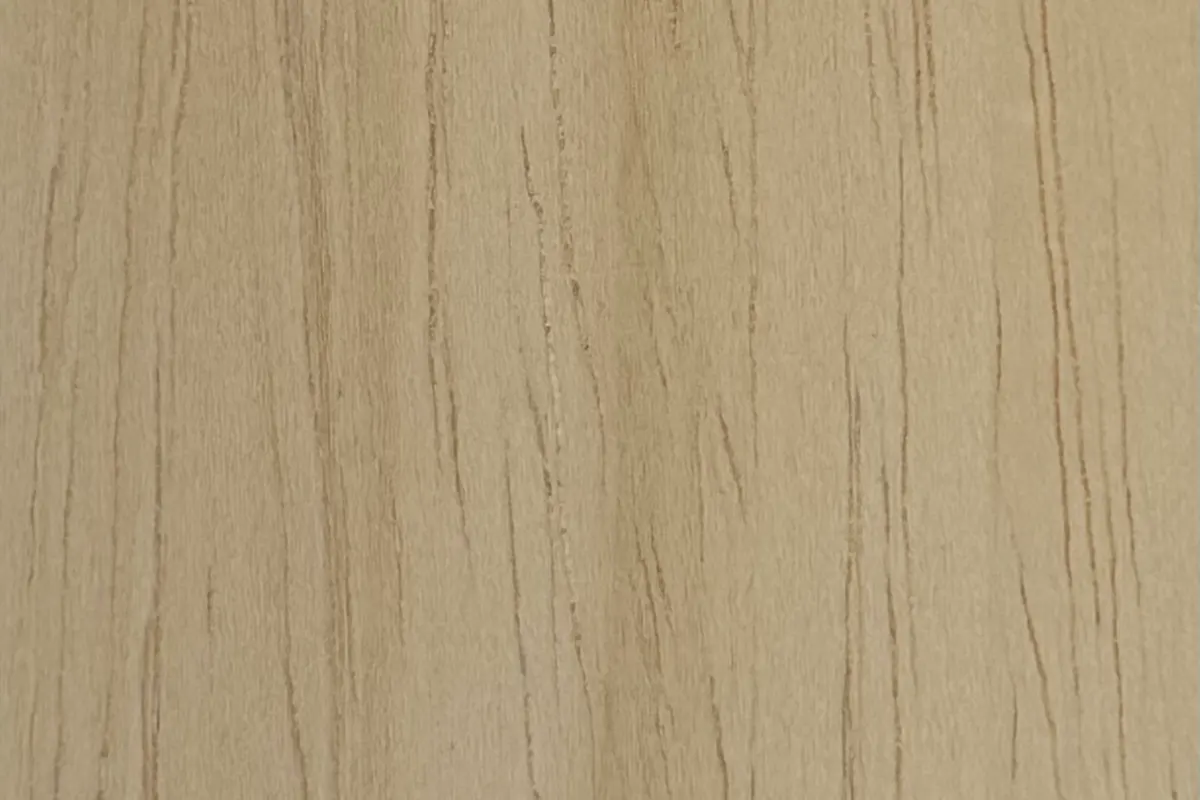
Identification summary
This record presents a single photo-based scan used as an example of wood grain types rather than a definitive species identification. The scan entry reports Origin as "Temperate North America / Europe (depends on species)" and is intended to illustrate grain and pore pattern clues that commonly appear in temperate hardwoods and softwoods.
The identification result treats the scan’s fields as the authoritative data: reported origin and the fact that this is a photo-only report. No laboratory testing or provenance documents are included in the scan, so species-level certainty is not claimed.
Use this example to see which grain patterns a photo can reasonably support, which characteristics need additional checks (end grain, pores, smell, density), and how to organize follow-up evidence before relying on a single picture.
Origin
| Reported origin | Temperate North America / Europe (depends on species) |
|---|
Material
| Material type | Wood (unspecified species; photo-based observation only) |
|---|
Condition
| Condition notes | Not reported in scan data |
|---|
Authentication
| Verification level | Photo-only scan; no laboratory or documentary authentication included |
|---|
Identification metadata
| Scan source and date | Source: scans; Identified at: 2026-09-05T17:39:51.428Z |
|---|
Historical context
Temperate North American and European timbers include species with a wide range of grain types: straight, spiral, interlocked, wavy, and irregular growth patterns. For furniture and millwork, selection often favors straighter grains, while figure such as interlocked or wavy grain shows up in species prized for appearance.
Photographs are useful for showing surface grain and pore texture, but market value, provenance, and historical use require additional documentary or physical evidence. This example is provided to help readers match visible grain clues to the common pattern categories used by wood specialists.
Sample identification: wood grain types example
This item is presented as a single photo-based scan whose recorded origin is "Temperate North America / Europe (depends on species)." The record is intended as an exemplar that shows how grain-type categories are reported in a scan and what conclusions a photo alone can and cannot support.
The scan does not include species-level confirmation, lab testing, or provenance documents. Because of that limitation, the narrative stays at the level of grain-type interpretation (straight, spiral, interlocked, wavy, irregular) and pore texture rather than asserting a species name or value.
Photos can reliably show surface grain direction and visible pore texture, which help narrow possibilities. They cannot confirm internal features such as density, exact pore arrangement on end grain, or chemical treatments; those require physical inspection or lab analysis.
Use this summary as a practical checklist: treat the scan’s reported origin as contextual information, accept grain-type inferences cautiously, and plan follow-up checks focused on end grain, pore patterns, and dimensional measurements.
- Scan-reported origin: Temperate North America / Europe (depends on species).
- Identification level: photo-based example; no lab confirmation in the record.
- Focus of this example: grain-type categories and pore texture that photos typically reveal.
What the report shows about wood grain types
The most telling attributes for grain classification come from grain direction, figure, and pore texture. A photo can usually distinguish broad categories: straight (parallel fibers), spiral (twisting fibers), interlocked (alternating twist), wavy (sinusoidal lines), and irregular (no consistent pattern). Pore texture—coarse, medium, or diffuse—adds another diagnostic layer.
Because the scan is photo-only, reported values should be read as visual observations rather than physical measurements. For example, pore texture seen on a face photo suggests ring-porous versus diffuse-porous structure, but confirming pore distribution on the end grain is needed for species-level claims.
Finish, stain, and aging change color and surface sheen. The scan’s data do not report finish or treatment, so color-based inference is unreliable here. That is why end-grain inspection, cross-section counts of pores per ring, and density tests remain important next steps.
When you document grain types from a photo, capture multiple views (face grain, end grain, close-up of pores) and note provenance details. The scan’s origin field points to a temperate range where both ring-porous (e.g., oak family) and diffuse-porous species occur, so pore texture is particularly useful in narrowing options.
- Why end grain matters: confirms pore arrangement and ray visibility not always clear on face photos.
- Pore texture clue: helps separate ring-porous from diffuse-porous temperate woods.
- Limit of color: stains and finishes can mimic many species—avoid species ID based on color alone.
- Next practical checks: additional photos (end grain), thickness/density checks, and provenance notes.
Context: grain patterns across temperate woods
Grain and figure have influenced wood use for centuries: straighter grains were preferred for structural members, while wavy or interlocked grains were prized for decorative veneers and turned work. In temperate North America and Europe, common commercial species span several of the five pattern categories used in this example.
Market and museum records often pair visual grain notes with documentary provenance to reach firm conclusions. Because this scan lacks such documentation, it functions best as an educational sample that demonstrates how grain categories map to practical next checks rather than as evidence of age or provenance.
If the goal is valuation or conservation treatment, follow the scan with physical tests and consult written documentation or a specialist. For everyday identification tasks—matching a table top to similar boards or deciding whether a piece is likely oak-like or diffuse-porous—this photo-level approach can give a useful first pass.
- Common temperate patterns: straight, spiral, interlocked, wavy, irregular.
- Use historical use and documented provenance to support visual grain evidence.
- Photos are valuable for narrowing options; they are rarely sufficient alone for high-stakes decisions.
Related guides
Compare your photos against this grain example
After you’ve gathered face and end-grain photos and noted pore texture, organize those images and observations in Wood Identifier - Wudora to compare them against grain-type examples and keep a clear record. The app is one optional next step to help you catalog photos and revisit clues; for guided reading, check the site’s identification pages and visual checklist before deciding on further testing. Visit https://woodidentification.app/ to learn more.
Take the next step →Frequently asked questions
How to identify wood from a single photo when I only have grain clues?
Start by noting the grain direction and pore texture: whether pores form rings (ring-porous) or are distributed evenly (diffuse-porous). Request or take close-up photos of the end grain, document any finish or stain, and record provenance details. A single face photo can suggest grain type but cannot confirm species or value without end-grain inspection and physical checks.
Can a photo show the difference between straight and interlocked grain patterns?
Yes, photos often reveal whether growth lines run in a consistent parallel direction (straight) or alternate and change direction (interlocked). However, angle, lighting, and finish can obscure subtle interlocking; clear, raking light and end-grain close-ups improve confidence.
What pore clues should I look for to narrow species possibilities?
Look for pore size and distribution—large, distinct pores arranged in seasonal bands suggest ring-porous species; small, evenly distributed pores suggest diffuse-porous species. Also check for visible rays on the quartered surface; large rays are characteristic of oak relatives, while indistinct rays point elsewhere.
When should I seek further testing beyond visual grain analysis?
If the identification affects conservation, sale, or safety decisions, follow up with physical tests: end-grain microscopy, density or hardness tests, and provenance documents or lab analysis. Photo-based scans are a useful first pass but not a substitute for specialist verification in high-stakes contexts.