
Spalted oak (likely white oak slab)
Which black oak wood details a photo can prove, which remain uncertain, and the next checks worth doing before you rely on a single scan result.
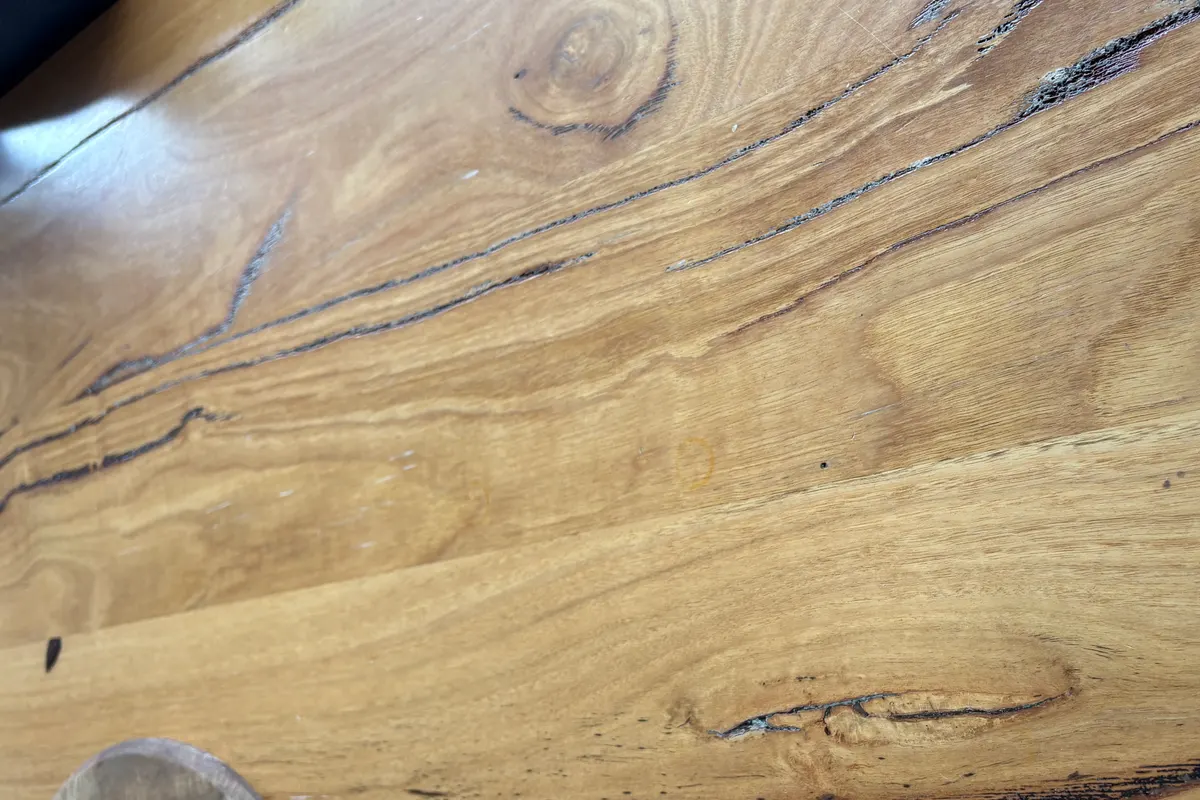
Identification summary
This identification record summarizes a scan result reported as black oak wood and places the result in context for further checks. The supplied scan fields list Origin as "Likely North America or Europe (white oak or similar Quercus species)" and record the identification time as 2026-10-06T02:44:09.652Z.
The scan did not provide a numeric confidence value, so the identification should be treated as provisional. The notes below explain which reported values support a black oak reading, what they do not prove, and which follow-up checks matter most.
Where the scan data is silent, the narrative makes no visual claims and only describes common physical checks—end grain, pore arrangement, rays, and construction details—that would normally support a species-level conclusion.
Origin
| Reported origin | Likely North America or Europe (white oak or similar Quercus species) |
|---|
Material
| Material reported | Not reported in scan fields beyond a generic oak identification |
|---|
Condition
| Condition reported | Not provided in scan data |
|---|
Physical Details
| Measurements or surface notes | No physical measurements or finish information supplied in the scan |
|---|
Authentication
| Scan confidence | Not supplied (scan confidence field is null) |
|---|
Historical Significance
| Provenance or market notes | Not provided in scan data |
|---|
Historical context
Black oak (commonly placed in the red oak group in botanical classifications) has long been used for furniture frames, flooring, and utility lumber in North America. As an editorial example, the label "black oak" is often applied in trade contexts where red oak–group characteristics are present despite the common name.
Market identification typically relies on a combination of regional origin, end-grain pore pattern, and visible ray structure. The scan's origin note supports a temperate Quercus species but cannot by itself confirm the wood is black oak or assign age, value, or authenticity.
Related guides
Organize your photos and compare visible clues with Wood Identifier - Wudora
After you gather targeted photos—end grain, edge views, and pore close-ups—use Wood Identifier - Wudora to organize them and compare the specific visual clues described above. The app can help you sort and label images and run those comparisons as a first pass; for higher certainty, combine that work with microscopic end-grain inspection or expert appraisal. Learn more at https://woodidentification.app/.
Take the next step →Frequently asked questions
How does black oak fit among the types of oak wood when I'm comparing furniture samples?
Black oak is classed in the red oak group despite its common name. When comparing samples, look for red-oak traits—larger, more open pores and broader rays—rather than assuming a dark name implies a different taxonomic group.
Can a single scan or photo prove an item is black oak wood?
A single scan or photo rarely proves a species-level identification. The scan in this record provided Origin but no confidence score or end-grain detail, so it should be treated as provisional. Multiple, targeted photos and physical checks increase reliability.
What visible clues most reliably distinguish black oak wood from other oak types in practice?
Consistent clues are end-grain pore arrangement (red oaks show ring-porous growth with larger earlywood pores), ray prominence, and the pattern of medullary rays. Also check for veneer edges and substrate differences—those can mislead visual ID if not inspected.
How should I interpret the scan's null confidence value for this black oak wood example?
A null confidence means the scan metadata did not include a reliability score. Treat the identification as a starting point: corroborate with end-grain photos, regional species expectations, and construction details before relying on the result for conservation, resale, or historical claims.