
Pine / SPF (likely spruce-pine-fir construction softwood)
By Tomas Alder
Compare the grain lines in this spruce-pine-fir scan, see what the board face reveals, and learn which end-grain or grade-stamp photo would help next.
Identification summary
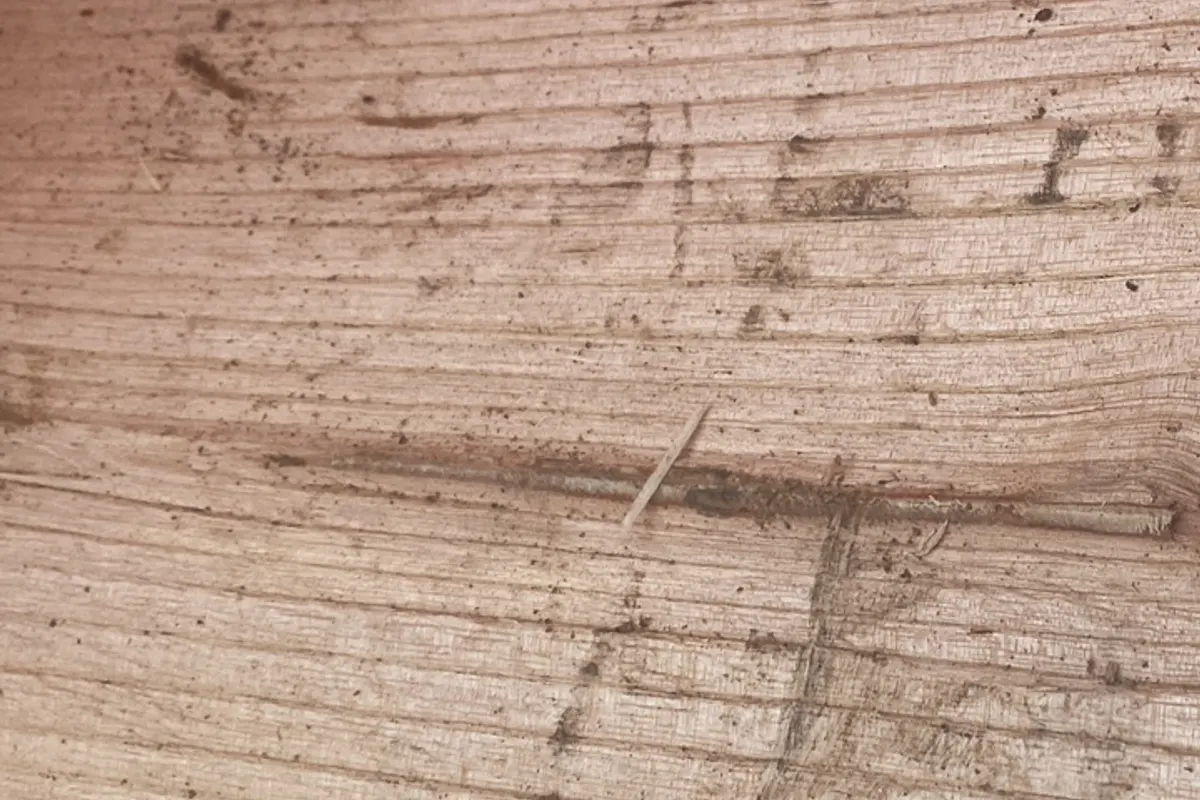
Wudora returned “Pine / SPF (likely spruce-pine-fir construction softwood).” The photograph shows the face of one piece of wood, with narrow dark bands running roughly parallel through a lighter surface.
The visible pattern is consistent with the broad result. The photo does not show a clean cross-section or a legible mill stamp. The record’s general sourcing note lists several possible regions and supplies no provenance for this particular piece.
Visible in the photo
| Surface | Long face of the wood with darker marks crossing the grain. |
|---|---|
| Grain | Narrow, roughly parallel bands across a light tan surface. |
Identification
| Result from Wudora | Pine / SPF (likely spruce-pine-fir construction softwood). |
|---|---|
| Specimen origin | Unknown. The scan lists common sourcing regions, not a documented place of harvest. |
What the spruce vs pine wood scan actually shows
Look near the top of the scan, where the surface has fewer dark marks. Thin brown lines run in much the same direction through the pale wood. Farther down, darker marks cross those lines. Following the same band from one part of the image to another helps distinguish the grain pattern from marks on the board face.
The app’s first word is “Pine,” but its full result includes “likely” and the wider spruce-pine-fir group. Those qualifiers matter here. The grain fits the suggestion, yet the view supplies no feature that settles which tree produced the board. A record of this specimen should keep the complete scan label.
Why the direction of the cut matters
This photograph looks along the grain. The long bands on that surface are a different view from the growth rings seen across the end of a board. Zooming in on a long face can magnify its scratches and ridges, but it cannot give you the view across the fibers that is missing here.
For a second photograph, use an already exposed, clean end and aim the camera squarely at it. Add a ruler near the surface and keep the whole width in focus. Retain the face photograph alongside it so the close-up can be traced to the same piece of timber.
The USDA Forest Products Laboratory’s Wood Handbook describes normal resin canals in both pine and spruce. Spotting a canal alone therefore cannot select between the two. Canal size and distribution can help when compared with reference samples on a clear cross-section. No individual canal is identifiable in this face photograph.
Read SPF as a lumber group
SPF is short for spruce-pine-fir. It groups several species for lumber trade and grading. The label in this example comes from the app. A legible stamp on the board would be separate evidence. If you find one, photograph the whole mark, including the letters around the species designation, before trying to interpret an isolated abbreviation.
The scan’s origin field describes places these woods are commonly sourced. It does not say where this piece grew or where it was milled. For a project record, keep the photograph, the full app result, and any supplier paperwork together. Leave the species open if the only additional evidence is a stamp that also says SPF.
More Types Of Pine Wood identifications
Related guides
Compare another board with Wudora
Start with a clear face photograph, then collect a view of the same board’s end grain. Use Wood Identifier - Wudora to obtain a candidate and check how specific the available evidence allows you to be.
Take the next step →Frequently asked questions
Does Pine / SPF mean this board is definitely pine?
The full label identifies a likely construction softwood and leaves spruce or fir in consideration. The straight, pale face visible in the scan fits more than one member of that group.
What would improve a spruce vs pine comparison most?
A sharp photograph taken across a clean end would add a different anatomical view. A photograph of any mill stamp would add a separate kind of evidence about how the lumber was labeled.
Can a dark line on the board face be counted as a resin canal?
A dark line on this face is insufficient to identify a canal. Surface marks, shadows, and growth bands are visible at the same scale. Even a confirmed canal on end grain would be compatible with both spruce and pine.
Can this scan establish the source region?
The origin note describes common sourcing regions for this material. Establishing where this particular board came from requires information tied to the piece, such as a mill record or supplier documentation.