Wood Identification
Ash: Identification, Value, and Real Examples
Practical, photo-focused guide to ash wood: what it is, visible identification clues, resale ranges, and common lookalikes with safe next steps.
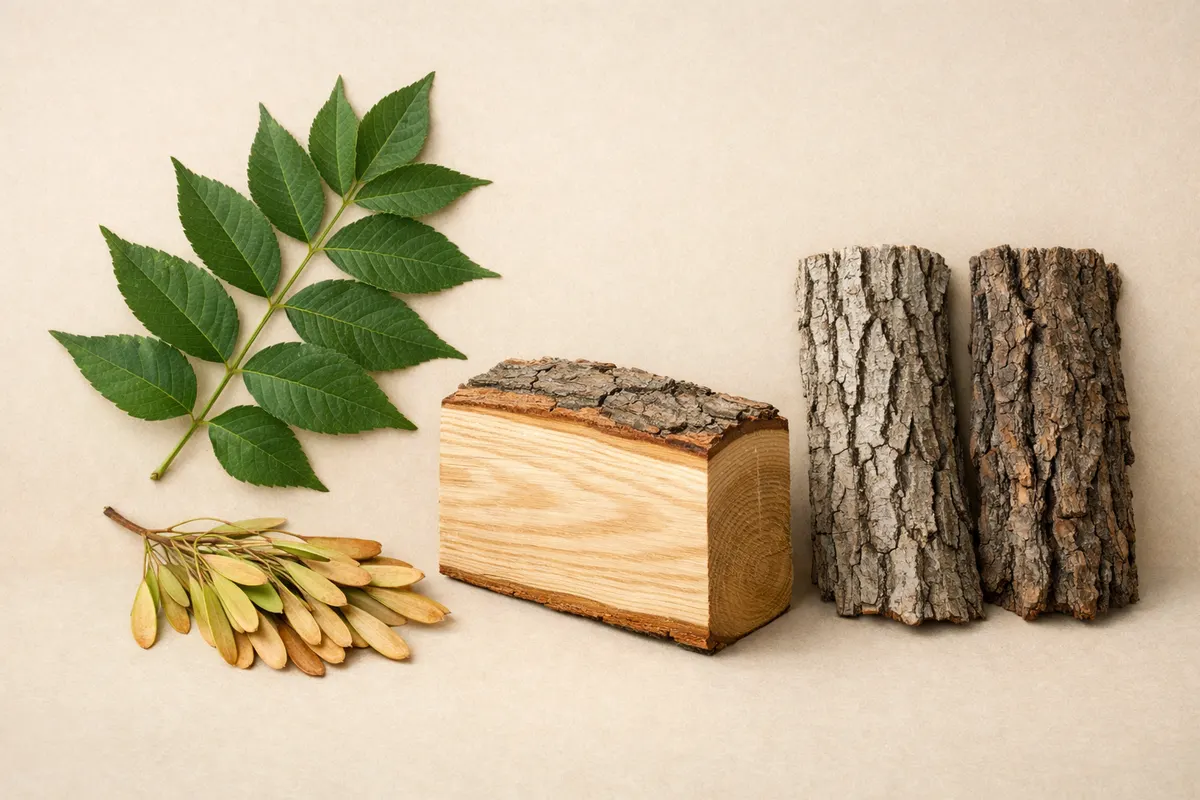
What ash wood is and where it’s used
Ash wood refers to several species in the Fraxinus genus, most commonly white ash (Fraxinus americana) in North America and common ash (Fraxinus excelsior) in Europe. It’s a ring-porous hardwood prized for straight grain, good shock resistance, and relatively light color that ranges from pale cream to light tan with a slightly warm tint.
Because of its toughness and springiness, ash is a frequent choice for tool handles, baseball bats, chair and furniture frames, and turned items. In older furniture and reclaimed pieces you’ll often find ash used where strength and visible grain were desirable but money for exotic woods was limited.
When you see an unlabeled board or piece that looks pale, straight-grained, and durable, ash wood is a sensible candidate—but context matters. Age, finish, staining, and species variation all change appearance, so a photo combined with provenance, construction details, and weight checks gives the most reliable read.
- Common species: White ash (Fraxinus americana) and European ash (Fraxinus excelsior).
- Typical uses: furniture frames, tool handles, sporting goods, flooring, and veneer.
- Color range: pale cream to light tan; sapwood usually indistinguishable from heartwood in younger boards.
How can you tell if a board or piece is ash wood?
Start with grain and pores in a photo. Ash is ring-porous: earlywood vessels form visible bands across growth rings. In plain-sawn faces this gives a clearly linear, often cathedral or ribboned grain that runs smoothly along the board.
Look at the growth-ring contrast and rays. Ash typically shows moderate contrast between early- and latewood; the rays are present but not as prominent as in oak. If the surface shows coarse open pores arranged in lines across rings, that supports an ash ID but can also appear in other ring-porous hardwoods.
Check end grain and density when possible. Ash feels lighter and a bit more springy than similar hardwoods like oak; end-grain photos reveal distinct ring-porous vessels and a clear transition from earlywood to latewood. Weight and how the piece responds to a simple tapping test add helpful context when a photo alone is equivocal.
Use finish and wear patterns as clues, not proof. A thin, transparent finish preserves visible grain and pore patterns; heavy staining or paint obscures them. For older furniture, joinery style, wear at stress points, and original hardware help corroborate a visual identification.
- Visible clue: straight, often ribboned grain with ring-porous vessel bands.
- Photo check: clear earlywood/latewood contrast on plain-sawn faces.
- End-grain trait: distinct vessels in rows; take a close, well-lit photo of the board end if possible.
- Context cues: construction, hardware, and expected regional species help narrow options.
Key facts about ash wood
The table below summarizes practical, photo-checkable attributes and basic material facts collectors and sellers notice most often. These are identification and handling cues you can observe or confirm with simple tests, not lab certifications.
Keep in mind that regional species and finishing can shift color and pore visibility. When uncertain, combine these specs with provenance, joinery, and additional photos (surface, end grain, and hardware) before making a buying or selling decision.
| Attribute | Typical | Photo-check notes |
|---|---|---|
| Genus / species | Fraxinus (white ash, common ash) | Look for straight, open grain and pale sapwood |
| Color | Pale cream to light tan | May darken slightly with finish or age; rarely red-toned |
| Grain / pores | Ring-porous; linear, ribbon-like patterns | Visible vessel bands on plain-sawn faces and end grain |
| Hardness (Janka) | Moderate to firm (~1,200–1,400 lbf typical range) | Feels lighter than oak but stiffer than many softwoods |
| Common uses | Furniture frames, handles, bats, flooring, veneer | Often left with clear finish to show grain |
- Common identification checks: face grain photos, close-up of pores, end-grain shot, weight/feel, and wear patterns.
- Hardness and mechanical use: valued for resilience and shock resistance in sporting goods and handles.
What ash wood typically sells for secondhand
Secondhand resale value for ash wood depends heavily on form and condition. Raw rough-sawn lumber, furniture-grade boards, finished furniture, and antiques all sit in different markets. The ranges below are typical secondhand tiers buyers commonly see; they are not formal appraisals and can vary with region, season, and specific demand.
Condition and provenance strongly influence price. A reclaimed ash board in good condition with clear grain and stable drying can command a premium for woodworking; vintage ash furniture that’s maker-signed or stylistically desirable sells for more than anonymous mass-produced pieces.
Photos help buyers and sellers set expectations but cannot replace an in-person inspection. Use these ranges as starting points for listings and offers, and be transparent about visible repairs, repaints, or structural issues when you present images.
| Tier | Typical secondhand range | What most affects price |
|---|---|---|
| Rough-sawn lumber | $2–$8 per board foot | Board width, drying quality, and clear width |
| Furniture-grade blanks / kiln-dried boards | $10–$40 per board foot | Grain pattern, absence of defects, thickness |
| Used furniture (common pieces) | $50–$350 per item | Condition, finish, and manufacturing quality |
| Antique / desirable maker pieces | $200–$2,000+ | Provenance, style demand, and restoration history |
- Driver checklist: visible grain quality, absence of major cracks, finish originality, and documented age/provenance.
- When listing, add close-up photos of grain, end grain, joinery, and hardware to support the price band you choose.
Commonly confused with
Ash and oak share ring-porous structure, so they can look similar at a glance, especially on plain-sawn faces. The fastest photo checks focus on pore size, ray visibility, and overall texture: oak usually has larger pores and much more prominent rays (visible as flecks or shimmer in quarter-sawn oak), while ash shows straighter, ribboned grain with smaller, more evenly spaced vessel bands.
End-grain photos are often decisive. Oak’s rays are wider and more conspicuous on the end grain; in ash the vessels appear in clearer rows and rays are finer. If the surface shows strong medullary rays (flecking), lean toward oak; if the face is ribboned without strong flecking, ash is more likely.
Other lookalikes include maple and elm in certain cuts. Maple lacks the ring-porous bands of ash and appears more uniform; elm can show interlocked grain that breaks up the straight ribbon look. When the photo is ambiguous, size measurements, weight, and joinery type provide useful supporting evidence.
- Tell-tale photo cues: oak = prominent rays/flecking; ash = straight, ribboned grain with smaller vessel bands.
- End-grain test: oak rays wider and more visible; ash vessels in distinct rows.
- If in doubt, add a close-up of end grain and a quarter-sawn face to your photo set.
Caring for ash wood items
Ash finishes well with oils, varnishes, and clear lacquers that highlight its straight grain. For unfinished or oil-treated ash, regular oiling (e.g., tung or Danish oil) can maintain appearance and reduce drying cracks in lower-humidity environments.
Avoid prolonged exposure to direct sunlight and extreme humidity swings; both can cause color shifts and checking in any hardwood. For flooring and high-wear surfaces consider a durable topcoat and regular maintenance to prevent abrasion that hides the natural grain pattern.
When restoring antiques, photograph original joinery and hardware before any repair. Major refinishing can remove clues important for identification and for resale; light cleaning and consolidation often preserve value better than aggressive stripping.
- Routine care: dust, clean with a damp (not wet) cloth, and reapply oil when finish looks dry.
- Restoration tip: preserve hardware and take pre-restoration photos to document originality.
Frequently asked questions
How can ash wood identification help me verify a chair found at a flea market?
Use clear photos of the seat rails, leg joinery, and a close-up of the face grain. Look for the straight, ribboned grain and ring-porous vessel bands typical of ash. Compare end-grain images if you can remove a drawer or inspect an exposed end. Combine those visual clues with construction details—hand-cut vs machine-cut joinery, screws vs pegged mortise-and-tenon—to better judge whether the piece is ash and how likely it is to be original or a later repair.
What visible damage or repairs reduce ash wood’s resale value in photos?
Cracks through structural members, replaced or mismatched joinery, heavy filler, and extensive repainting are the main photo-red flags. Surface scratches and minor dents lower value moderately, but visible structural repairs or replaced veneer panels typically reduce a piece’s market tier more steeply. Always show clear close-ups of any damage when listing so buyers can price accordingly.
Can I rely on one photo to decide if a board is ash before buying online?
No single photo is usually sufficient. A single face shot may hide end-grain, finish, or repairs that change identification and value. Request at least three photos—face at good lighting, close-up of pores, and end grain—plus measurements and weight if possible. That combination gives a much stronger basis for a confident listing or purchase decision.
What are the quickest photo checks for ash vs oak when evaluating a tabletop at a yard sale?
Take a close, well-lit photo of the surface and one of the end grain. On the face, look for ribboned grain (ash) versus visible flecking or strong rays (oak). On the end grain, oak’s rays show as wider, shimmering bands; ash shows clearer vessel rows without the broad ray flecks. If finish or stain obscures pores, inspect an unfinished edge or underside for a cleaner comparison.
Related guides
Compare your photo to ash clues with Wood Identifier - Wudora
After you’ve photographed grain, end grain, and any joinery, open Wood Identifier - Wudora on your device to compare your images against the ash clues on this page. The app helps highlight grain patterns and likely lookalikes so you can decide whether a piece looks like ash from the available photos. Remember—an app is a first check; for high-value or uncertain items, follow up with in-person inspection or a specialist.