Wood Identification
Mahogany: Identification, Value, and Real Examples
Learn photo-friendly clues to recognize mahogany wood, spot lookalikes like sapele, and understand cautious resale ranges for secondhand pieces.
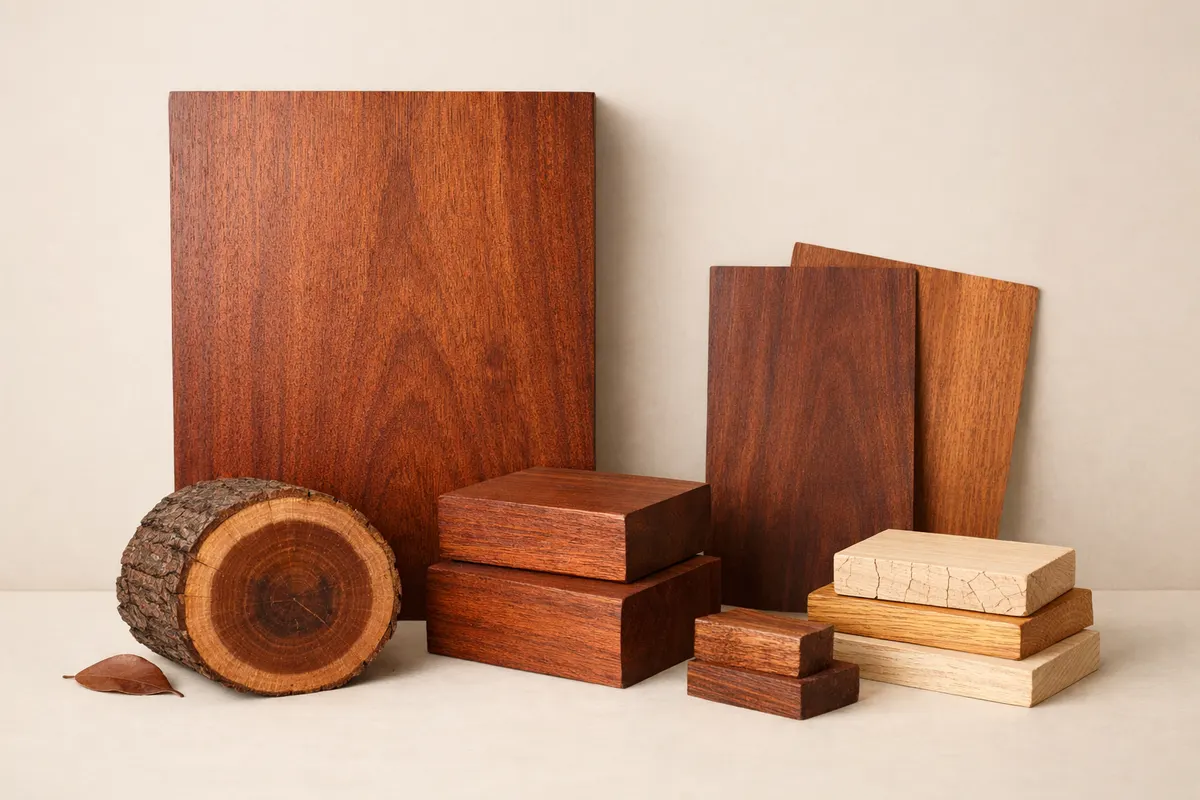
What mahogany wood is and where it comes from
Mahogany wood refers to a group of tropical hardwoods prized for straight grain, warm red-brown tones, and stability in furniture and veneers. True mahogany historically means species in the Swietenia genus (notably Swietenia macrophylla), but the trade also groups lookalikes and related African and Asian species under the mahogany name. In everyday antiques and furniture descriptions, "mahogany" often signals a dense hardwood with a red to reddish-brown color and a tendency to polish to a warm luster.
Used widely for period furniture (Georgian, Victorian, and colonial pieces), mahogany wood is favored because it machines and finishes predictably, resists warping when quartersawn, and takes shellac and French polish very well. The wood’s origin (Central/South America for Swietenia, West Africa for khaya/species often called African mahogany) affects pore structure, figure, and typical board width.
Photographs can show grain pattern, color, figure, and finish wear — all useful signals — but they cannot prove species with certainty. Context such as the piece’s age, joinery, and provenance combined with visible clues raises or lowers confidence when you’re looking at a photo.
- Typical uses: high-end furniture, veneers, cabinetry, musical instruments, and decorative millwork.
- Common trade names: genuine/Spanish mahogany (Swietenia), African mahogany (Khaya, Entandrophragma), and commercial "mahogany" veneers.
- Why it matters: genuine Swietenia mahogany is relatively rarer and often commands higher prices than common trade mahoganies.
How can you tell mahogany from a photo?
Good photos can narrow possibilities. Look first for the overall color (warm red-brown that may darken with age), a straight to slightly interlocked grain, and medium-to-large open pores visible on a flat-sawn surface. Quarter-sawn mahogany will show subtle ribbon-like figure rather than the broad cathedral grains you see in many softwoods.
Edge, end-grain, and pore pattern are especially useful. In close-up photos the pores on Swietenia species appear more arranged and somewhat larger than on many temperate hardwoods; rays are generally narrow and not as prominent as oak. Veneer patterns can mimic solid wood grain, so visible matching at seams, consistent pore size, and repeating figures can reveal a veneered surface.
Photo checks help but are limited. Surface finish, lighting, and stain can mask natural color; wear, patina, or shellac layers can hide pores and fine figure. Combine photo clues with construction details (dovetails, hand-planing marks, original hardware) for a stronger identification.
- how to identify mahogany — quick photo checklist: color (red-brown), straight to interlocked grain, visible medium pores, and warm patina on worn edges.
- Inspect end grain in close-ups: true mahogany shows relatively coarse pores and a diffuse-porous pattern, not the distinct rays of oak.
- Watch for repeating veneer patterns: identical repeats across panels usually mean veneer, not solid boards.
- Compare proportions: mahogany furniture often uses narrow quartersawn veneers or wide solid boards in higher-grade pieces.
Key facts and quick identification specs for mahogany wood
The table below gives compact, photo-relevant attributes you can check quickly. For field identification, combine the listed surface cues with context — the piece’s age, region, and how it’s finished — to raise or lower confidence.
Keep in mind the same visual traits sometimes appear in related species and well-executed stained veneers. Use the table as a checklist rather than definitive proof.
| Attribute | Typical | Photo clue | Quick note |
|---|---|---|---|
| Species group | Swietenia (New World), Khaya/Entandrophragma (African) | Not visible, but geographic context helps | Labeling/age can suggest origin; photos can’t confirm species |
| Color / patina | Warm red-brown to deep mahogany over time | Warm glow on worn edges; red undertones in daylight | Sunlight and finish affect appearance |
| Hardness | Moderate to hard (Janka varies by species) | No direct photo cue; dense woods take finer detail | Weight and sound when tapped are helpful in person |
| Grain / figure | Straight to interlocked; quartersawn shows ribbon figure | Parallel ribbons or straight grain visible on face | Veneer may repeat patterns; check seams |
| End grain / pores | Diffuse-porous with medium-to-large pores | Pores visible in macro photos; rays subtle | Compare pore scale to known hardwoods for context |
| Common uses | Fine furniture, veneers, cabinetry, instruments | Joinery style and board width hint at quality | Original finishes (shellac/polish) common on antiques |
- Composition: tropical hardwoods in several genera; Swietenia species are classic "genuine" mahogany.
- Common settings: period furniture, piano cases, veneers, and trim work where stable, attractive grain is desired.
What mahogany wood furniture commonly sells for
Resale values for mahogany wood items vary widely with age, maker, condition, construction (solid vs veneered), and provenance. Values below are secondhand-market tiers intended as a directional guide — they are not appraisals and should not be treated as firm prices from photos alone.
Photographs can help place a piece into a tier (for example, whether it appears to be solid, well-constructed, or veneered), but they rarely capture maker marks, hidden repairs, or structural issues that materially affect value.
| Tier | Typical resale range (used) | What drives price |
|---|---|---|
| Utility / scrap | $20–$150 | Small parted pieces, damaged boards, non-restorable veneers |
| Standard furniture grade | $150–$1,200 | Good condition mass-produced pieces or veneered case goods |
| High-grade quartersawn or solid | $1,200–$6,000 | Solid construction, quartersawn veneer, quality joinery |
| Antique / maker / rare | $6,000–$50,000+ | Documented maker, original finish, rare form or provenance |
- Price drivers: species origin, solid vs veneer, visible joinery, original finish, maker/label, and rarity of form or period.
- Condition notes: worn finishes lower retail but can increase antique desirability in some markets; replaced hardware or structural repairs reduce value.
Species and woods commonly mistaken for mahogany
Several woods mimic mahogany’s warm tones and grain, which is why photographic ID must include comparison checks. Sapele and certain African mahoganies are closest in appearance; stained cherry and walnut can also be mistaken at a glance, especially under warm indoor lighting.
Lookalikes often differ in pore pattern, ray visibility, and figure repetition. Veneers add another layer of confusion because a thin decorative layer can imitate a higher-grade species across a piece of cheap substrate.
- Sapele — often confused due to red-brown color and interlocked grain; sapele tends to show a more pronounced ribbon or fiddleback figure on quartersawn surfaces.
- Khaya and other African mahoganies — share many traits with Swietenia but can have slightly different pore scale and board width typical for African sources.
- Stained cherry — cherry’s grain is finer and has small, more evenly distributed pores; cherry often darkens uniformly whereas mahogany keeps a reddish tone.
- Walnut (stained) — walnut has darker brown tones and different grain contrast; check pore size and the presence of small sapwood bands in photos.
Care and handling for mahogany wood pieces
Preserve original finish when possible. Mahogany finishes (shellac, French polish, lacquer) contribute to value on antiques. Light surface cleaning with a soft cloth and pH-neutral wood cleaner avoids stripping protective layers visible in photos.
Avoid strong solvents or aggressive sanding on panels that may be veneered. If the grain looks like repeated veneer patterns in photos, assume thin decorative layers and treat conservatively to prevent exposing substrate.
For restoration, document current condition with close-up photos of joints, end grain, and any maker’s marks before any work. Conservators and experienced furniture restorers can often use those photos to recommend safe next steps — but an in-person inspection remains the final word for restoration planning.
- Dust with a microfiber cloth; use wax or polish sparingly and only after testing an inconspicuous area.
- Keep humidity stable to reduce cracking or joint separation in solid mahogany pieces.
- Consult a conservator before stripping finishes on suspected antiques; photos alone don’t prove originality.
Frequently asked questions
Genuine mahogany vs sapele: Can I tell which I have from a photo?
Photos can suggest whether a piece is sapele or a Swietenia mahogany by showing color, grain figure, and pore pattern: sapele often exhibits a more pronounced interlocked ribbon or fiddleback figure on quartersawn faces, while Swietenia tends to have a more even red-brown tone and slightly different pore spacing. However, finish, lighting, and veneer use can hide these clues. Use high-resolution macro photos of end grain, close-up pores, and any labels or joinery details to increase confidence — but expect a qualified in-person check if precise species identification matters.
How can I identify mahogany in older furniture when the finish is worn or darkened?
Worn edges and scrape-through areas are among the most useful photo clues because they expose fresher wood beneath the finish. Look for red-brown undertones at those exposed spots, check end grain where pores are visible, and examine joinery: older mahogany pieces often have finer dovetails and solid construction. If the wear reveals a distinct light sapwood band or obvious staining, that may indicate a different species or a repair. When possible, supply images of drawers, underside, and the backs of pieces for a fuller view.
Can I get a reliable resale value estimate for a mahogany piece from just photos?
Photos allow a first-pass valuation range by showing condition, visible construction, and whether the piece looks solid or veneered, but they cannot replace a hands-on appraisal. Use photos to place an item into broad tiers (utility, standard, high-grade, antique) and to identify clear red flags like missing structural elements or heavy repairs. For firm estimates, pair photos with provenance, dimensions, maker marks, and an in-person inspection from a specialist.
Is labeling a piece as 'mahogany' always trustworthy when buying used furniture online?
Not always. Sellers commonly use the mahogany label loosely to describe reddish-brown woods or veneered furniture. Photos of end grain, matching veneer seams, and close-ups of joinery are the best antidote to vague labeling. If a listing lacks those photos or uses terms like "mahogany finish" or "mahogany color," treat the claim as marketing until you can verify with clearer images or documentation.
Related guides
Compare your photo to these mahogany clues with the Wood Identifier - Wudora app
If you have photos of a piece, use Wood Identifier - Wudora on your phone as a practical first pass: compare macro shots of end grain, pores, and worn edges against the photo checklist above. The app can highlight matching visual clues and point out likely lookalikes, but it should be one step in your verification workflow — combine its results with construction photos, provenance, and, when needed, an in-person expert inspection before relying on species or value conclusions.