Wood Identification
Red Oak: Identification, Value, and Real Examples
A practical field guide to red oak wood: visible traits, photo-check steps, cautious resale ranges, and common lookalikes to check in your images.
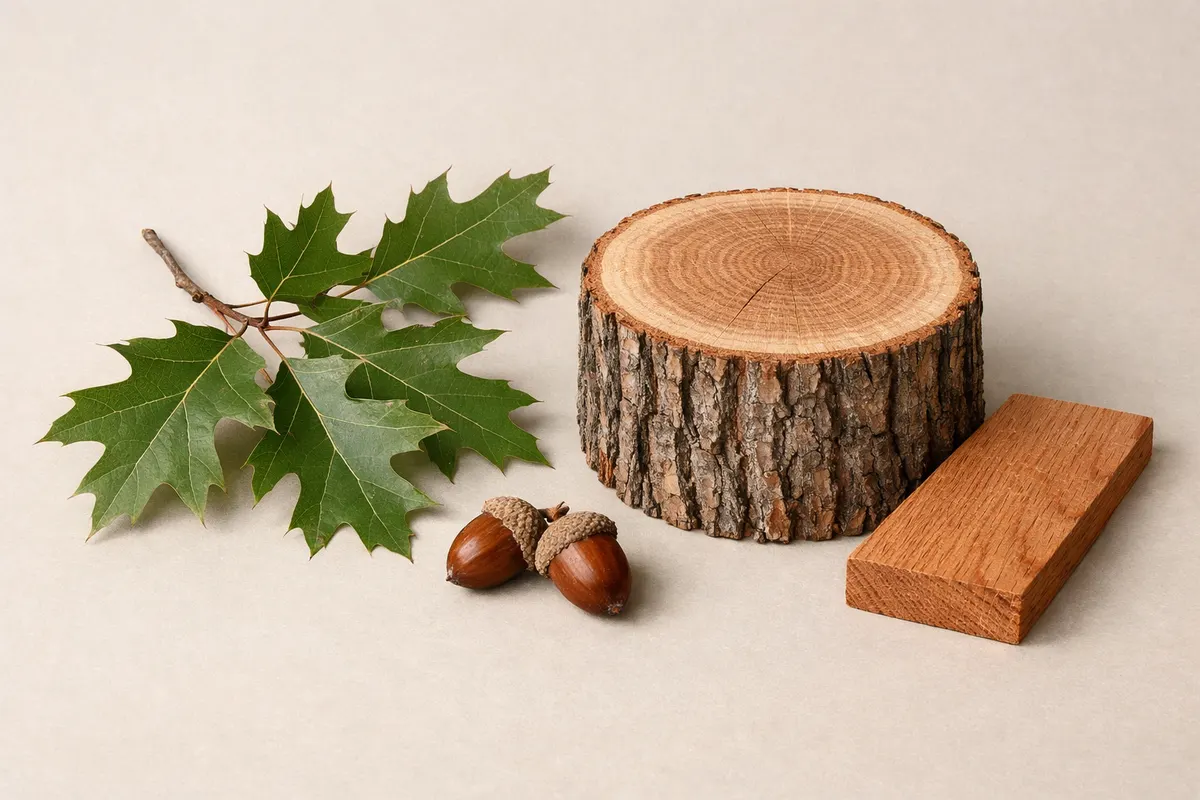
What red oak wood is and where it comes from
Red oak wood refers to lumber sourced primarily from the North American red oak group (genus Quercus, commonly Quercus rubra and relatives). It’s a ring-porous hardwood widely used for flooring, furniture, cabinetry, millwork, and turned items because of its strength, open grain, and steady availability.
In the trade, “red oak” is a practical label rather than a single botanical species: it groups similar oaks with pinkish to warm-brown sapwood and coarser pores than many hardwoods. Color and figure vary with age, finish, and whether boards are quarter-sawn or plain-sawn.
Knowing red oak’s typical uses helps set expectations from a photo: plain-sawn red oak shows cathedral grain and open pores that accept stain unevenly, while quarter-sawn red oak shows straighter grain and distinctive medullary rays that can appear as flecks or ribbons in photos.
- Typical uses: flooring, furniture, veneer, stair parts, and millwork.
- Characteristic look: warm pinkish to reddish-brown hue in heartwood; lighter sapwood.
- Durability: medium-hard hardwood commonly used where stability and appearance matter.
How to identify it
Start by checking three visible zones: the face grain, the end grain (if visible), and the color contrast between sapwood and heartwood. Red oak typically shows a noticeable contrast between pale outer sapwood and warmer, often pink-tinged heartwood. Grain runs visibly in broad cathedral patterns on plain-sawn boards.
Pores are the most diagnostic camera-ready clue: red oak is ring-porous, with larger pores in the earlywood rows that form visible lines or streaks along the growth rings. In crisp close-ups you can often see those rows as darker dots or short lines following the grain direction.
Quarter-sawn red oak presents a different photo signature—straighter vertical grain and medullary rays that look like narrow light ribbons or flecks across the face. Those rays are a strong signal that the wood is oak and, when combined with pore pattern, favor red oak identification over many other species.
Lighting, finish, and stain can mislead: glossy polyurethane amplifies contrast and can hide pores; dark stains level out color differences. Always note the finish and photograph at multiple angles (face, edge, and a close-up of any exposed end grain) to improve confidence.
- how to identify red oak
- Look for ring-porous rows of larger pores visible as dotted lines in the grain.
- Check for pinkish heartwood with lighter sapwood contrast under matte lighting.
- If you can, get a close-up of end grain—distinct pores and short rays are telltale oak markers.
Key facts and photo clues for red oak wood
This compact table collects the physical and visual attributes most useful when assessing red oak from photos or in the field. Use the rightmost column to translate lab-style specs into what you can capture with a camera.
Remember that some laboratory details (exact Janka number) can only suggest probable species; the photo clues column lists practical signals you can check in images or on-site with a loupe.
| Attribute | Typical value | What to look for in photos |
|---|---|---|
| Species group | Red oak complex (Quercus spp.) | Warm pink-tan heartwood with pale sapwood contrast |
| Janka hardness | Approx. 1,290 lbf (varies by species) | Solid appearance, resists denting relative to softwoods |
| Pore structure | Ring-porous with large earlywood pores | Rows of larger pores forming dotted or streaked lines |
| Grain and figure | Plain-sawn cathedral; quarter-sawn straight with rays | Cathedral arches on flatsawn; straight lines and flecks if quarter-sawn |
| Common uses | Flooring, furniture, millwork, veneers | Look for matching grain across boards in floors and panels |
- Species group: North American red oaks (Quercus spp.).
- Typical forms: plain-sawn boards, quarter-sawn panels, veneers, and turned pieces.
- Photo-ready clues: pores, rays (if quarter-sawn), and sapwood/heartwood contrast.
What red oak wood is worth in secondhand markets
Any value guidance here is secondhand-market oriented and intentionally cautious. Prices depend heavily on context: board dimensions, grade, whether the wood is finished or raw, provenance, and local demand. A photo gives clues to grade and finish but cannot produce an appraisal.
When sellers and buyers trade red oak salvaged flooring or lumber, they typically price by the board foot or by the piece. Antique or maker-attributed furniture can command much higher premiums that hinge on maker, condition, and provenance rather than species alone.
Use the ranges below as directional indicators. If you need a precise market estimate, consult local salvage dealers, auction records for comparable pieces, or a qualified appraiser who can inspect the item in person.
| Tier | Typical resale range | What primarily drives price |
|---|---|---|
| Common construction lumber | $1–6 per board foot | Thickness, length, and defects; rough-sawn vs surfaced |
| Flooring-grade planks (used) | $2–10 per square foot | Board width, finish condition, nail holes, and color uniformity |
| Quarter-sawn or figured panels | $5–20+ per board foot | Rarity of figure, consistent grain, and usable panel sizes |
| Antique or maker furniture | $50–$2,000+ per piece | Maker, provenance, condition, and desirability of the style |
- Typical drivers: board grade, quarter-sawn vs plain-sawn, visible figure, finish condition, and documented provenance.
- Condition matters: water damage, heavy surface wear, or insect damage reduces resale value dramatically even for oak.
- Finish and patina can increase desirability for vintage furniture; for lumber, straight, dry, defect-free boards command higher per-board-foot prices.
Commonly confused with
Several species and finishes can mimic red oak in photographs. Most common confusions involve other oaks, ash, and sometimes stained maple. A few simple photo checks help separate these possibilities.
Texture and pore visibility are decisive: oak’s ring-porous pores and—on quarter-sawn material—visible medullary rays give oak a signature appearance that ash and maple lack. Still, heavy staining or opaque finishes can hide pores, making confusion more likely.
When you see a puzzled board, compare pore pattern, ray presence, and the overall tone. For additional contrast in aging and pore behavior versus a different species, consult Cherry Wood Color: Aging, Grain, Pores, and Finish Clues to see how color shifts and pore visibility differ.
- red oak vs white oak grain
- White oak: rays are often broader and pore pattern and color can be greyer; look for tyloses in white oak end grain that block pores.
- Ash: straight grain but more even pore distribution and a paler, more uniform color when unfinished.
- Maple (stained): uniform tight grain; if pores are invisible at macro scale, consider stained maple as a lookalike.
Care and handling
Red oak finishes well but the open pores can trap grime and finish unevenly. For finished surfaces, clean with a pH-neutral hardwood cleaner and avoid saturating the wood. For raw or unfinished lumber, keep boards dry and stacked flat with stickers to minimize cupping.
Refinishing red oak often benefits from light sanding and a grain-filling step if you want smooth, glassy floor surfaces; alternatively, leaving the grain open and using a penetrating oil can highlight the natural texture and rays.
Store and handle red oak with attention to humidity: like other hardwoods, red oak will move across seasons. For furniture and flooring, aim to install or display pieces in environments between 30–55% relative humidity when possible to reduce long-term movement.
- Avoid steam cleaners and high-moisture treatments on finished oak floors.
- When refinishing, test stains on a small scrap to check how the open pores take color.
- Keep stacked lumber off the ground and evenly supported to prevent bowing.
Frequently asked questions
Can I confirm red oak from a single photo of a tabletop?
A single photo can strongly suggest red oak when it clearly shows ring-porous rows of larger pores, pinkish heartwood, or quarter-sawn rays. However, finishes, stains, and lighting can mask those clues. Treat a photo as a strong lead rather than a definitive identification; additional images (edge/end grain, close-up pores, and an unvarnished spot) improve confidence.
What are the best photo angles to prove a board is red oak?
Capture three views: a face shot for overall grain pattern, a macro close-up (2–6 inches) showing pores and rays, and an end-grain or board-edge shot to reveal pore arrangement. Matte lighting at a low angle highlights pores and rays better than harsh, direct flash.
Can a smartphone image show quarter-sawn rays clearly enough to identify red oak?
Yes—modern smartphone cameras can capture quarter-sawn rays when you photograph at close range with steady lighting. Look for narrow, reflective ribbons or flecks running across the grain; those medullary rays are a strong oak indicator and are especially visible on quarter-sawn red oak.
How should I compare red oak to white oak grain if my floorboard looks greyed or finished?
Compare the pore pattern and ray character: white oak often shows tighter pores with tyloses that can block pores and a greyer tone, while red oak’s pores are more open and its heartwood leans pink-brown. If finish or greying hides color, focus on pore rows and ray width; a small, unobtrusive end-grain photo can be decisive.
Related guides
Compare your photo to red oak clues with Wood Identifier - Wudora
Use Wood Identifier - Wudora on your phone to run a side-by-side check of your photos against the red oak clues on this page. Start by photographing the face, a close-up of the pores, and any visible end grain; the app helps match visible traits and highlight where a single image remains inconclusive. Remember: the app is a fast first pass—for precise value or authenticity questions, follow up with in-person inspection or a qualified appraiser.