Wood Identification
White Oak: Identification, Value, and Real Examples
Learn which visible clues in a photo point to white oak wood, what those clues mean, and cautious secondhand value ranges to expect for furniture and lumber.
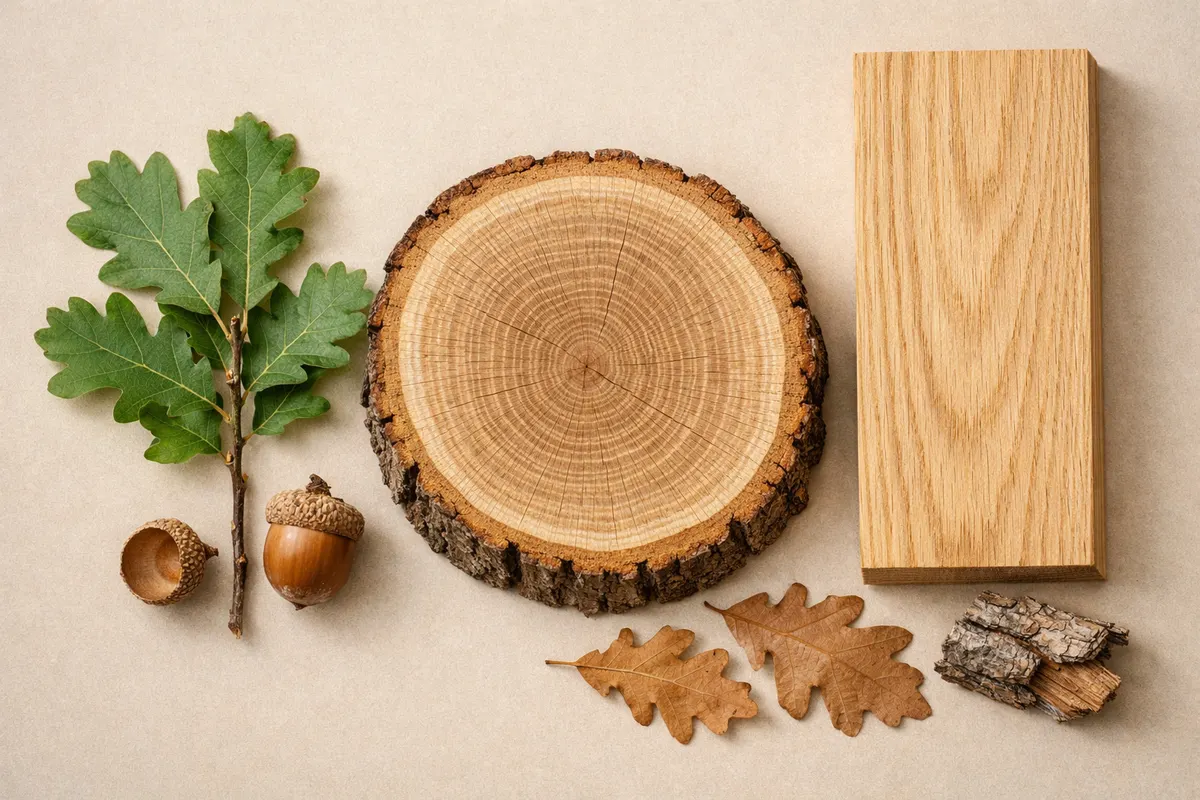
What white oak wood is and where it’s used
White oak wood is a temperate hardwood from species in the Quercus genus, most commonly Quercus alba in eastern North America. It is valued for its dense, ring-porous structure, straight to slightly wavy grain, and natural resistance to moisture and rot compared with many other hardwoods.
In furniture and millwork, white oak appears as solid boards, veneer, and engineered flooring. Its heartwood ranges from light tan to medium brown and develops a warm patina with age and finish. Cooperage and outdoor joinery also use white oak because tight rays and tyloses reduce water permeability.
For a photographic reference, expect white oak wood to show pronounced rays in quarter-sawn surfaces, visible pores on flatsawn faces, and a general golden-to-brown tone when unfinished. Age, finish, exposure, and species variants will shift those visual cues, so context—where the item came from and what it was used for—matters when interpreting photos.
How to identify white oak
When you check a photo for white oak wood, start with macro grain and pore patterns. White oak is ring-porous: earlywood shows larger pores arranged in lines or bands, and latewood has much smaller pores. On flatsawn boards this looks like streaky pores along growth rings; on quarter-sawn boards it reveals broad, shimmering medullary rays.
Color alone is unreliable, but combined with pore and ray patterns it helps. Unfinished white oak tends to be a pale honey that darkens slightly with age and exposure. Stains, varnishes, and water damage can mask natural tone, so note whether the surface is finished and whether grain texture still reads through the finish.
Use high-resolution and oblique-angle photos to reveal rays and pores. Look for these photo-checkable signals in this order of priority: pore pattern, ray visibility, ray width on quarter-sawn surfaces, and medullary ray shimmer under raking light.
- Pronounced medullary rays on quarter-sawn boards: wide, light-colored ribbons that flash under raking light.
- Ring-porous pore pattern on flatsawn faces: rows of larger pores visible as lines across growth rings.
- Tight, interlocked grain with coarse texture; pores are visible to the naked eye in good photos.
- Heartwood color from light tan to medium brown; sapwood is paler and often visible at edges or end grain.
- Few or no barn-like reddish hues common to red oaks; presence of pink-red tones should raise caution.
- End grain shows diffuse tyloses (blocked vessels) in white oak — pores can appear filled or sparse compared with red oak.
Key facts
The table below summarizes the technical and practical attributes to expect from white oak wood. Use these rows as quick checks when a photo gives you end grain, quarter-sawn surfaces, or a clear flatsawn face.
Photographs that include end grain and growth-ring detail will give the most reliable quick checks listed in the table.
| Attribute | Typical value | Notes |
|---|---|---|
| Species | Quercus alba (commonly) | Also related white oaks in Europe and Asia share similar traits |
| Grain pattern | Ring-porous, straight to slightly wavy | Quarter-sawn shows wide medullary rays |
| Hardness (Janka) | 1,360 lbf | Harder than many softwoods; flooring-grade durability |
| Heartwood color | Light tan to medium brown | Darkens with age and finish; sapwood paler |
| End grain pores | Visible but often filled (tyloses) | Tyloses reduce water uptake compared with red oak |
| Common uses | Furniture, flooring, barrels, exterior joinery | Used where durability and water resistance are useful |
| Care sensitivity | Moderate | Stable but benefits from controlled humidity and finish maintenance |
What white oak wood is worth on the secondhand market
Resale values for white oak wood vary widely by form (raw lumber, finished furniture, antique joinery), condition, finish, and provenance. The tables below show cautious secondhand tiers and the main drivers that move pieces between them. Treat these as market ranges, not appraisals; local demand and specific condition can push prices outside these bands.
Photographs help establish grade (select vs common), evidence of quarter-saw milling, and age/finish, which are the largest visual drivers of value from images alone. Rarity (old-growth stock, cathedral figuring, or provenance) and maker marks require additional documentation beyond photos to meaningfully change value estimates.
| Tier | Typical resale range | What drives price |
|---|---|---|
| Utility / common boards | $2–$6 per board foot | Straight-sawn, knotty, mixed grade; local supply |
| Furniture-grade lumber | $6–$12 per board foot | Select grade, consistent color, finished on one or both faces |
| High-grade quarter-sawn / figured | $12–$30+ per board foot | Quarter-sawn rays, low defects, archival stock |
| Antique or maker pieces | Variable — often hundreds to thousands | Provenance, joinery quality, condition, and design |
Commonly confused woods and how a photo helps
White oak is most often mistaken for red oak, ash, and some American chestnuts in photographs. Photos emphasize different diagnostic cues for each lookalike: pore arrangement for oak species, ray width for chestnut, and straightness of grain for ash.
A good photo that includes end grain and quarter-sawn faces can usually rule out the most common confusions. Below are practical, photo-focused differences to check.
- Red oak: larger, more open pores and a pinker or redder cast; ring-porous pores remain but tyloses are usually absent—end grain shows more open vessels.
- Ash: similar light color but more uniform diffuse-porous pattern and very straight, coarse grain without wide medullary rays.
- Chestnut (old reclaimed boards): rays visible but growth-ring spacing and grain irregularities can differ; context and provenance help.
- Cherry (appearance overlap in finished pieces): darker reddish tones and smoother, tighter grain—see cherry wood color resources for contrast.
Care and handling for white oak pieces
White oak is durable but benefits from routine finish maintenance. For finished furniture, clean with a soft cloth, avoid strong solvents, and reapply a compatible oil or varnish when finish wear exposes bare wood. For exterior or moist environments, ensure coatings remain intact to preserve the wood’s natural resistance to water.
If you own raw or unfinished white oak boards, store them flat in a stable-humidity environment to prevent cupping and check for insect holes or fungal staining before using. When refinishing, test stains and sealers on a small inconspicuous area because white oak’s tyloses and grain can accept finishes unevenly.
For antique pieces, preserve original finishes where possible. Aggressive sanding can remove medullary rays or maker marks that affect historical value, so consider conservation-minded cleaning and stabilization first.
Frequently asked questions
How to identify white oak on a floor photo where finish hides the grain?
When a finish obscures grain, look for edge or end-grain glimpses where sapwood shows, and use raking-light photos to reveal subtle ray shimmer. Quarter-sawn planks show medullary rays across the board even under varnish. If those clues are missing, note that a single finished photo may be inconclusive; additional pictures of end grain, edges, or an area with scratched finish will improve confidence.
What maintenance extends the life of outdoor white oak joinery?
Regularly inspect and maintain protective coatings: reapply spar varnish or exterior oil before the finish begins to fail, keep drainage and ventilation clear, and avoid prolonged ground contact. White oak resists moisture better than many hardwoods, but coatings and hardware details (stainless fasteners, breathable sealers) are key to long-term performance.
White oak vs red oak: How can I tell which is in my old floor photo?
Compare pore openness and color cast in the photo. Red oak often shows more open, visible vessels on end grain and a pinker-red cast on flat faces, while white oak has more filled or obscured pores (tyloses) and a plainer brown-tan tone. Quarter-sawn white oak will show wide, bright medullary rays that red oak rarely produces as prominently.
Can I get a firm value from just one photo of a white oak table?
No. A single photo can suggest grade, species likelihood, and condition, but it cannot confirm provenance, internal damage, or maker details that materially affect value. Use photos to form an initial market-range estimate and then combine them with measurements, construction details, and provenance to reach a firmer secondhand price range.
Related guides
Compare your photo to white oak clues with Wood Identifier - Wudora
After you’ve checked the visible clues above, use Wood Identifier - Wudora on iOS to compare your photos against reference features like rays, pores, and end grain. Treat the app as a first-pass visual comparison—follow up with measurements, provenance, or an in-person inspection before making value or authenticity decisions.